
Last updated October 15, 2026
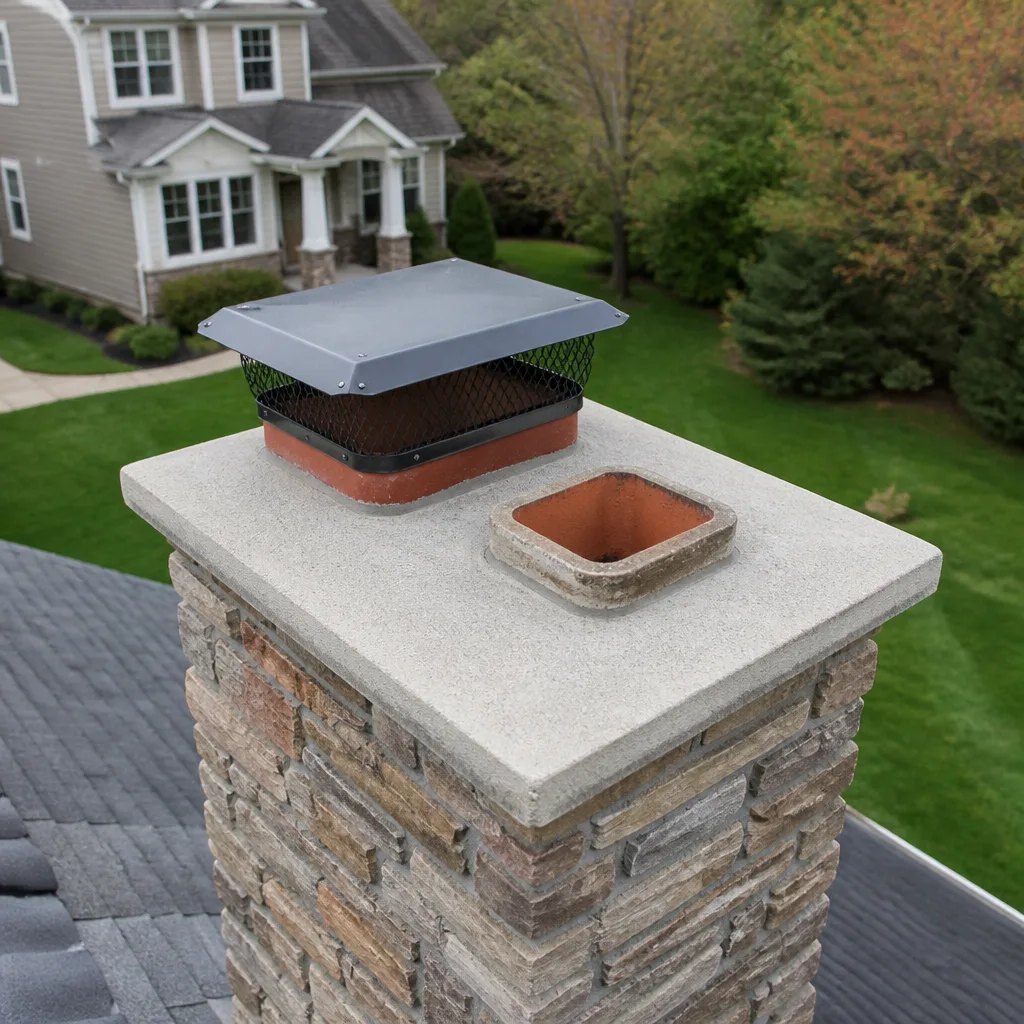 Sweep & inspection
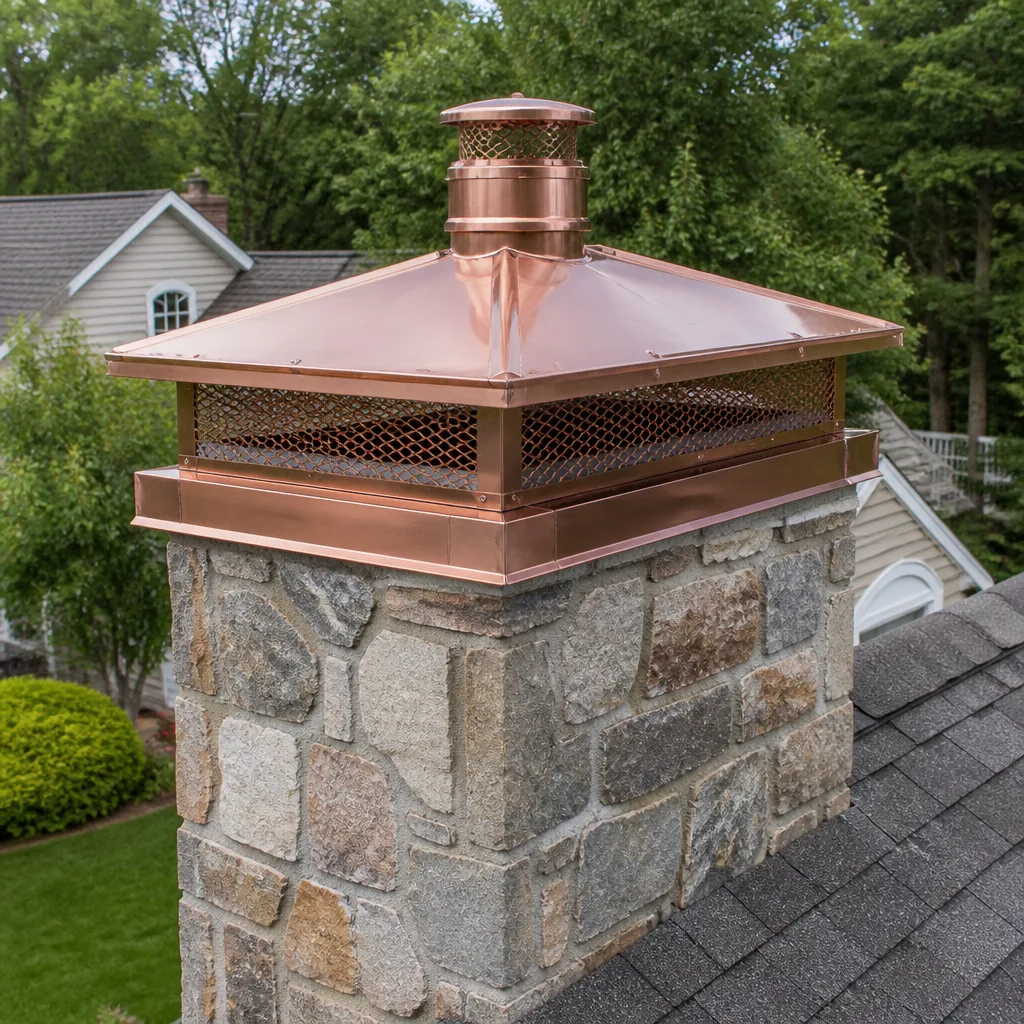 Caps & crowns
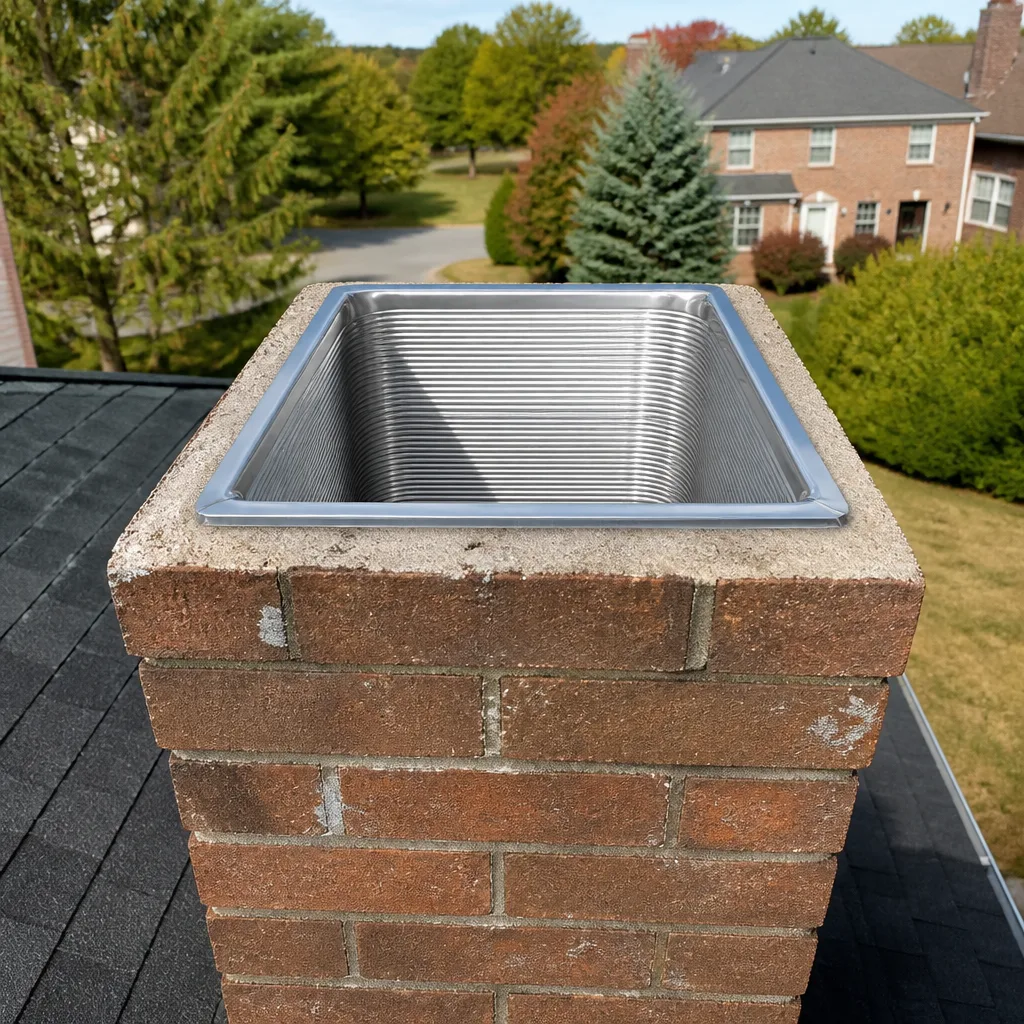 Flue relining
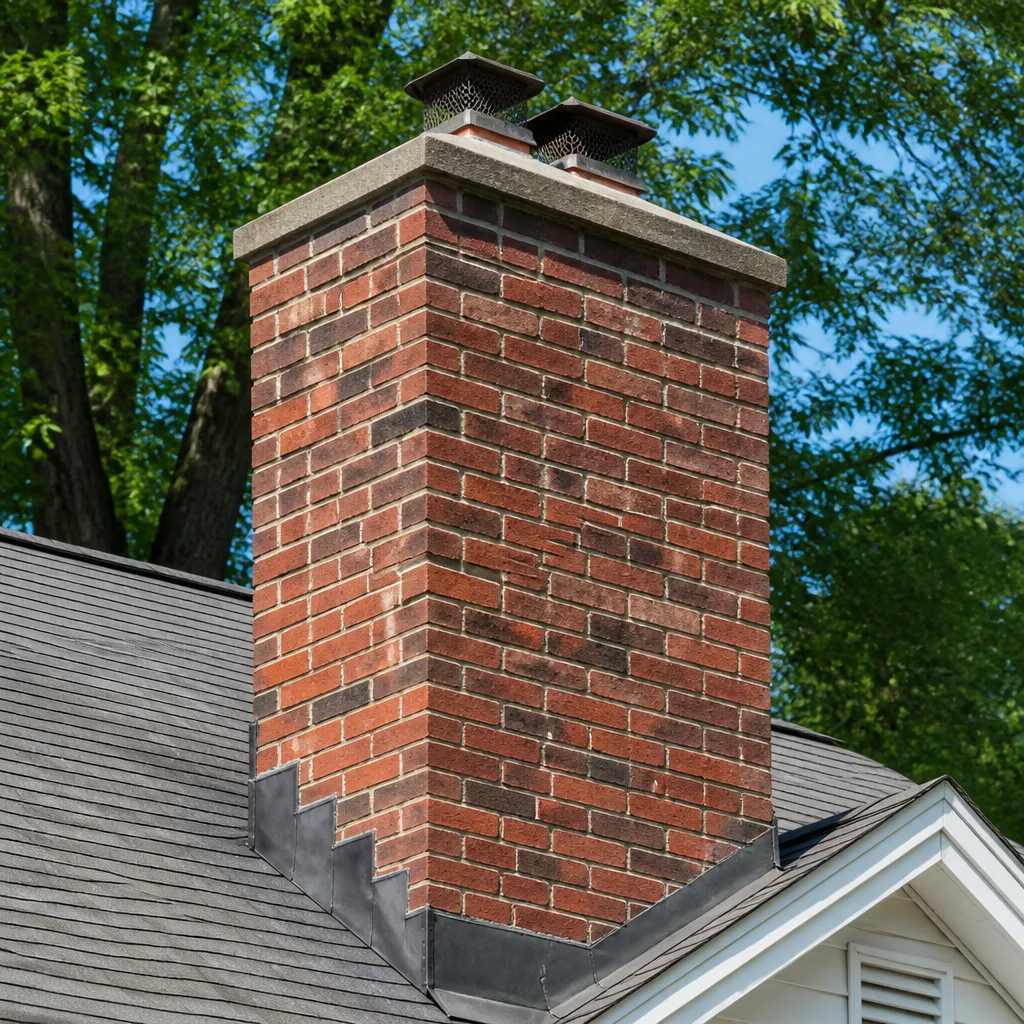 Masonry repair
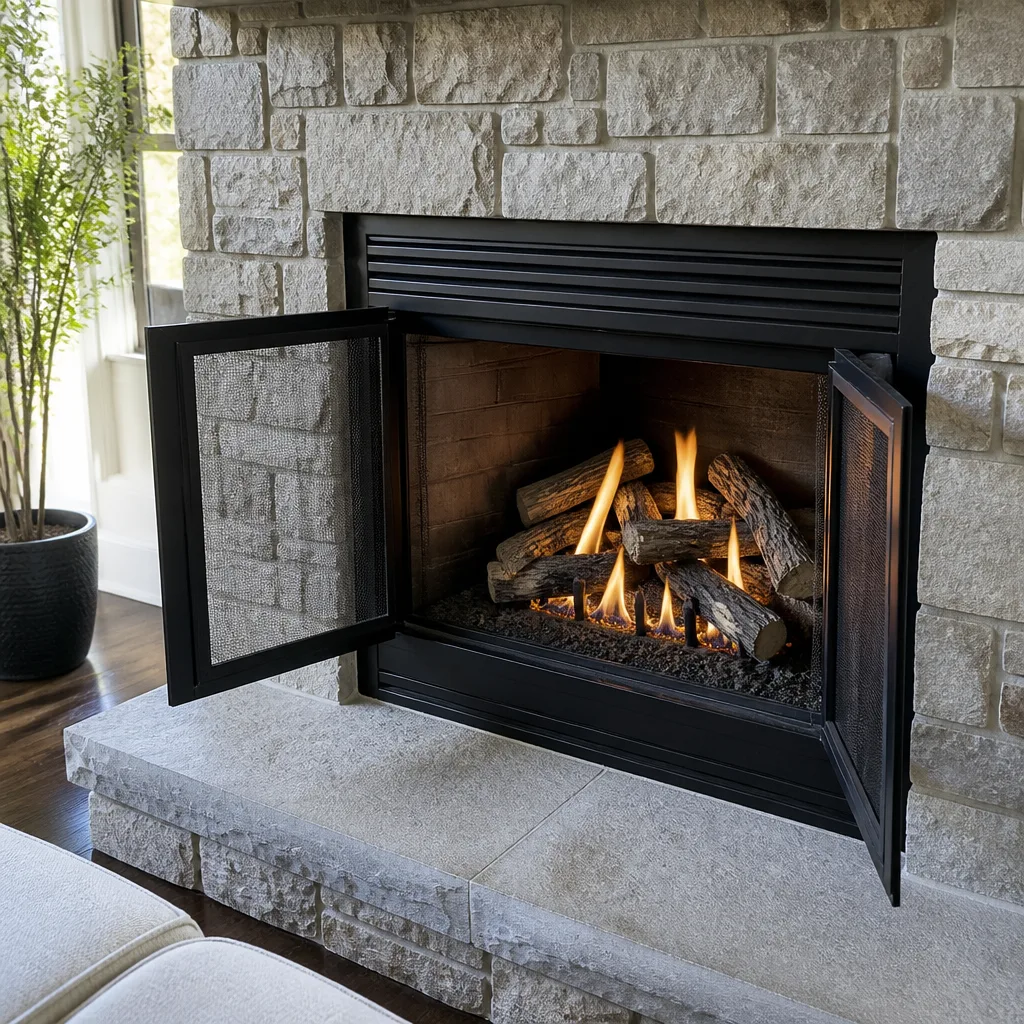 Gas fireplace service
Level 1 sweep and inspection to the NFPA 211 annual standard - flue, crown, cap, and flashing checked and photographed
Chimney sweep logs do not sweep chimneys. They loosen some creosote - which then falls where a brush and vacuum still have to collect it.
How to Hire a Chimney Cleaning Contractor in Sandy Springs: A Step-by-Step Guide
Here is a fact most homeowners in Sandy Springs don’t learn until after an awkward conversation on their own doorstep: Georgia does not require a state license to clean chimneys. Not a certification, not a permit, nothing. Anyone with a brush, a van, and a Google Business profile can legally show up at your door tomorrow morning and call themselves a chimney sweeping company. That single regulatory gap means the entire weight of hiring well falls on you: knowing what to ask, what to demand in writing, and how to spot a contractor who thinks “certified” is a marketing word rather than a verifiable credential. This guide gives you that structure, built from more than two decades of chimney work in Sandy Springs and the surrounding north metro area, and you can explore more guides & resources for ongoing homeowner support. You’ll learn the four written documents every legitimate contractor should provide before a single tool leaves the truck, how to verify certification in under two minutes, and the three questions that separate a prepared professional from someone counting on you not to ask.
Quick Answer
To hire a chimney cleaning contractor in Sandy Springs, start by verifying certification through the CSIA public registry, require a written scope of work and itemized estimate before agreeing to anything, confirm cleanup and warranty terms in writing, and insist the technician actually at your house is the certified one. A reputable contractor will put all four documents in your hand unprompted; a risky one will explain why they don’t need to. Kindling Chimney Sandy Springs follows a written care promise on every visit so families know the price, the process, and the clean-up before work begins.
Styles & brands we work with
Table of Contents
- Why Certification Matters More in Georgia Than Almost Anywhere Else
- The Four Written Documents Every Legitimate Chimney Contractor Should Provide
- How to Verify CSIA Certification in Under Two Minutes
- The Three-Question Interview That Unprepared Contractors Cannot Pass
- Red Flags Specific to the Atlanta-Area Chimney Market
- How a Written Care Promise Removes Each Hiring Risk
- Questions to Ask Before You Book in Sandy Springs
- The Bottom Line
Why Certification Matters More in Georgia Than Almost Anywhere Else
Georgia’s lack of a state licensing requirement for chimney sweeps creates a hiring environment unlike most home trades. Electricians answer to the Georgia State Board of Electrical Contractors. Plumbers answer to the State Construction Industry Licensing Board. Chimney sweeps answer to no state regulatory body at all. That means the burden of verification shifts entirely to the homeowner, and the only meaningful third-party credential left is voluntary certification through the Chimney Safety Institute of America, known in the trade as CSIA.
CSIA certification is not a rubber stamp. A technician earns it by passing a written exam on fire codes, clearances, draft mechanics, and inspection standards, then completing documented hours of hands-on work. Certified sweeps must recertify every few years through continuing education. But here is the nuance most homeowners in Sandy Springs miss: “certified technician on staff” is not the same as “the person who shows up at your house is certified.” A company can employ one certified person in an office while sending uncertified crews into the field. That arrangement is legal, and it is common. When you call a company, ask a direct question: “Will the technician who comes to my home be CSIA certified themselves?” Write down the answer. If it is anything other than an unqualified yes, move on.
Certification matters for a practical reason too. A poorly trained sweep can damage a chimney faster than a fire can. Wrong brush sizes scrape mortar joints. Aggressive sweeping chips clay flue tiles. A technician who does not understand chimney anatomy will miss a cracked tile or a failing damper because he never looked for it. Families in Sandy Springs who use their fireplaces two or three nights a week from October through February are generating creosote at a rate that demands professional attention, not guesswork, as detailed in our Seasonal Chimney Cleaning Care for Sandy Springs: Year-Round Homeowner’s Guide. We recommend starting your hiring search by confirming certification before you ever discuss price. It is the cheapest filter you have.
The Four Written Documents Every Legitimate Chimney Contractor Should Provide
If you remember nothing else from this guide, remember this: hiring a chimney contractor well means hiring a company that writes things down before work begins. Not after. Not “when the technician arrives.” Before. There are four documents that separate a prepared, accountable contractor from one who is hoping you won’t ask for details. Require all four, in writing, before you authorize a single tool to leave the truck.
- Scope of work. This is a plain-language description of exactly what the technician will do. “Sweep the flue” is not a scope. A proper scope reads like this: “Sweep the fireplace flue from the firebox to the chimney cap; remove creosote deposits; inspect the smoke chamber, damper, firebox, flue liner, and chimney crown; report findings with photos.” A scope protects you from a technician who sweeps the flue and then charges extra for what you assumed was included. It also protects the contractor from scope creep. Both parties win.
- Itemized estimate. A written estimate should break down line items: sweep price, inspection price, any parts or materials with brand names, labor, and a total. An itemized estimate lets you compare quotes realistically. A lump sum with no detail is not an estimate; it is a guess with a number attached. In our experience, most standard chimney sweeps in the Sandy Springs market run between $180 and $340, with variations based on flue length, creosote stage, and whether the chimney has ever been cleaned. An itemized estimate tells you exactly what you are paying for at that price.
- Cleanup commitment. This is the most overlooked document in chimney hiring, and it matters enormously to families with kids and pets. A written cleanup commitment states what will be protected inside the home, how surfaces will be covered, and what condition the home will be left in when the crew departs. Look for specifics: shoe covers on arrival, drop cloths laid before the vacuum comes through the door, furniture protected or moved with permission, a photo of the finished work area before the crew leaves. If a company will not put its cleanup standards in writing, you are trusting a handshake. Trust a document instead.
- Warranty terms. A warranty is only as good as the paper it is written on. Ask for the warranty in writing and read it. What exactly is covered? For how long? What does the contractor define as “done right”? What is the process for making a claim? A verbal promise of “we stand behind our work” disappears the moment there is a problem. We put our warranty language in writing on every job through our 365-Day Done Right Promise: if the work is not right, we make it right, no fine print, no runaround. Whatever company you hire, demand the same standard.
How to Verify CSIA Certification in Under Two Minutes
Verifying a CSIA certification is faster than reading a restaurant menu. The Chimney Safety Institute of America maintains a public, searchable registry of every certified chimney sweep in the country. It is free, it does not require an account, and it takes about ninety seconds to use. Here is the exact process:
- Go to the CSIA website and find the “Find a Certified Professional” search tool.
- Enter the company name or the technician’s name. You can also search by city and state, which is useful in Sandy Springs because several north metro companies serve the area from neighboring towns.
- Review the results. The registry shows each certified technician, their certification number, and the status of their credential.
- When the technician arrives at your door, ask to see their CSIA ID card. Compare the name on the card against the name you verified online.
That last step matters more than you think. A company can legally advertise “CSIA certified” if one person in the organization holds the credential. That person does not have to be the one holding a brush in your living room. The registry tells you who is certified; the ID card tells you who is standing in your home. If the names do not match, you have not hired a certified sweep. You have hired a certified sweep’s coworker. There is a difference. We tell families in Sandy Springs to run this check before booking, not after. It costs nothing and it filters out a surprising number of calls.
The Three-Question Interview That Unprepared Contractors Cannot Pass
You can tell a lot about a chimney contractor in three questions. These are not trick questions. They are baseline knowledge questions that any trained, experienced sweep should answer without hesitation. What they reveal is not whether a contractor is polite, but whether they understand the work they are being paid to do. We have used a version of these questions internally for years as a training exercise. A technician who hesitates on any of them needs more supervision. A contractor who cannot answer them to your face does not deserve your business.
Question 1: “What stage of creosote are you looking for, and why does it matter?”
Creosote is not one substance. It exists in three recognized stages. Stage one is a flaky, soot-like deposit that brushes off easily. Stage two is a harder, tar-like glaze that requires mechanical removal. Stage three is a hardened, glossy, fuel-rich coating that can require chemical treatment or specialized tools. A knowledgeable sweep can explain all three, identify which stage your chimney likely has based on usage and wood type, and explain how the removal approach changes. A contractor who says “we just clean it” has not been trained and should not be paid.
Question 2: “How long will you be in my home, and what will you need from me?”
This question tests process, not knowledge. A professional contractor knows their timeline, knows what they need from the homeowner, and can describe it clearly. You should hear specifics: “about 45 to 60 minutes for a standard sweep, plus 30 minutes for the inspection,” “we need a clear path from the door to the fireplace,” “we will lay drop cloths at the hearth and run a HEPA vacuum throughout.” A contractor who cannot answer this question does not have a process, which means you cannot predict what will happen in your home. The Cedarwell Care Promise that guides every Kindling visit exists partly because of this exact failure in the industry: too many families had no idea what to expect when a crew arrived, and that uncertainty is avoidable.
Question 3: “If you find something wrong, what happens next?”
This is the question that separates a sweep from a sales pitch. A trustworthy contractor will describe a calm, evidence-based process: the technician documents the issue with photos, shows you the camera footage or images, explains what the issue means for safety and function, provides a written recommendation, and leaves the decision to you. No pressure. No “this chimney is unsafe to use until you sign.” A contractor who answers this question with fear-based language or an on-the-spot upsell is telling you exactly what kind of company they are. Our own rule is simple: nothing is recommended without camera evidence the homeowner can see for themselves, and we say plainly when work can safely wait. That standard should not be unusual. It should be the floor.
Red Flags Specific to the Atlanta-Area Chimney Market
Sandy Springs sits inside a major metro market, and that geography creates hiring risks that do not exist in rural Georgia. The Atlanta area has a large, transient population of contractors, a competitive digital marketing landscape, and enough chimney work to attract companies from outside the city looking to claim a share. Here are the red flags we tell families in Sandy Springs to watch for:
- Door-to-door solicitation after storms. Severe weather in north Georgia damages chimneys, and legitimate repair work follows. But the knock-on-your-door contractor who “happened to be in the neighborhood” after a hailstorm or wind event is a well-documented pattern in the Atlanta market. Legitimate chimney companies in Sandy Springs do not canvass neighborhoods looking for damage. They answer the phone when you call them.
- Non-local call centers dispatching local subcontractors. Call a phone number and reach a call center in another state, then a different company name shows up at your door with a subcontractor’s van. This arrangement is common in metro Atlanta and it should concern you. The person you hired is not the person doing the work, and accountability becomes a shell game. Ask who will actually perform the work and whether they are an employee of the company you are calling.
- Estimates given over the phone without a flue measurement. A technician cannot honestly price a chimney sweep or repair without seeing the chimney. Flue length, creosote stage, liner condition, and roof access all affect the price. A company that quotes a firm price over the phone is guessing. A written estimate after an inspection is the professional standard.
- “Certified” claims with no verifiable name. As covered earlier, certification is attached to a person, not a company. A company that says “certified technicians” on the website but cannot produce a name and registry match is using the word as decoration.
- Pressure to sign before an inspection is complete. The classic chimney scam in every market is the low-price sweep followed by a high-pressure “we found structural damage” pitch with no evidence shown. The end of the inspection should be the beginning of a conversation, not a demand for a signature.
How a Written Care Promise Removes Each Hiring Risk
Everything in this guide so far has pointed toward one structural solution: hire a company that writes its commitments down. The entire Kindling approach is built around this principle, because we have spent enough years in Sandy Springs homes to know exactly which risks families are most worried about, and every one of them is solvable with documentation. Here is how a written care promise addresses each hiring risk directly.
Price risk. No-hassle upfront pricing means a written price is delivered before any work starts, every time. No on-the-spot pressure, no surprise line items. Families know the bill before the brush touches the flue.
Cleanliness risk. Parents do not want soot tracked across a living room where a toddler crawls. Pet owners do not want chemical residues near food bowls. The Cedarwell Care Promise puts it in writing: shoe covers and drop cloths go down on arrival, nothing is moved without asking, and a photo of the clean-up is taken before the crew leaves. Every visit.
Craftsmanship risk. A sweep that misses creosote or an inspection that misses a cracked tile is a failure. The 365-Day Done Right Promise covers this: if the work is not done right, we make it right, on every chimney sweep, inspection, and fireplace repair.
Trust risk. Background-checked, uniformed technicians following the C.A.R.E. values on every visit. The values spell it out: Care for the home, Accountability for the work, Respect for the family, Excellence in the details. That is not a marketing slogan. It is a checklist a technician follows inside your home.
We also use professional-grade materials from trusted chimney brands like DuraFlex, HeatShield, Olympia Chimney, and Copperfield when repairs are needed, because a written promise is only as strong as the materials behind it. You do not have to hire us. But you should demand this same standard from whoever you do hire.
Questions to Ask Before You Book in Sandy Springs
By now the hiring process should be taking shape as a structured interview, not a leap of faith. Here is a distilled list of the questions every Sandy Springs homeowner should ask before booking a chimney cleaning, arranged in order of importance. Print it, save it, or just remember the first three. They will eliminate most of the risk.
- Will the technician at my house be CSIA certified themselves? Verify the name in the public registry before the visit.
- Can you provide a written scope of work and itemized estimate before I authorize anything? If the answer is no, the interview is over.
- What is your cleanup commitment, and will it be in writing? Look for shoe covers, drop cloths, furniture protection, and a photo record.
- What does your warranty cover, and for how long? Get the language in writing, not a verbal summary.
- Who will perform the work: an employee or a subcontractor? The answer affects accountability.
- How do you handle recommendations for repairs? You want photos, explanations, written recommendations, and no pressure.
- What is your process if I am not satisfied? A company with a defined process is a company that expects to satisfy you.
If you are comparing quotes, remember that the cheapest price on a chimney sweep often costs the most when the flue was never actually cleaned or the inspection missed a crack. For families in Sandy Springs looking for a Chimney Sweep in Sandy Springs who works to a written promise, Kindling Chimney Sandy Springs provides written pricing before work begins, a documented cleanup process, and a 365-Day Done Right Promise on every job. You can also see how our approach carries over at the Kindling Chimney Sandy Springs home page, where our care standards are explained in plain writing.
Common Mistakes to Avoid
- Booking based on price alone. The lowest quote in Sandy Springs is often low because it excludes something: cleanup, inspection, or a properly sized brush. A $149 sweep that misses creosote in the smoke chamber is not a bargain.
- Not asking who will actually arrive. The voice on the phone may represent a call center. The person at your door may be a subcontractor. Ask for names, employer relationships, and certification status before you book.
- Skipping the written scope. “We’ll take care of it” is not a scope of work. A written scope prevents disputes and defines what success looks like.
- Trusting a “certified” claim without verification. Two minutes on the CSIA registry is all it takes. Do it every time, even for companies that look professional.
- Ignoring cleanup standards. A sweep performed without drop cloths or shoe covers will leave fine soot on carpets and upholstery. Families with children crawling on those floors should not accept this.
- Not getting warranty language in writing. Verbal warranties evaporate. Demand the document.
- Hiring after a storm without researching the company. Post-storm canvassers in the Atlanta area are a known pattern. A reputable local company does not need to knock on doors.
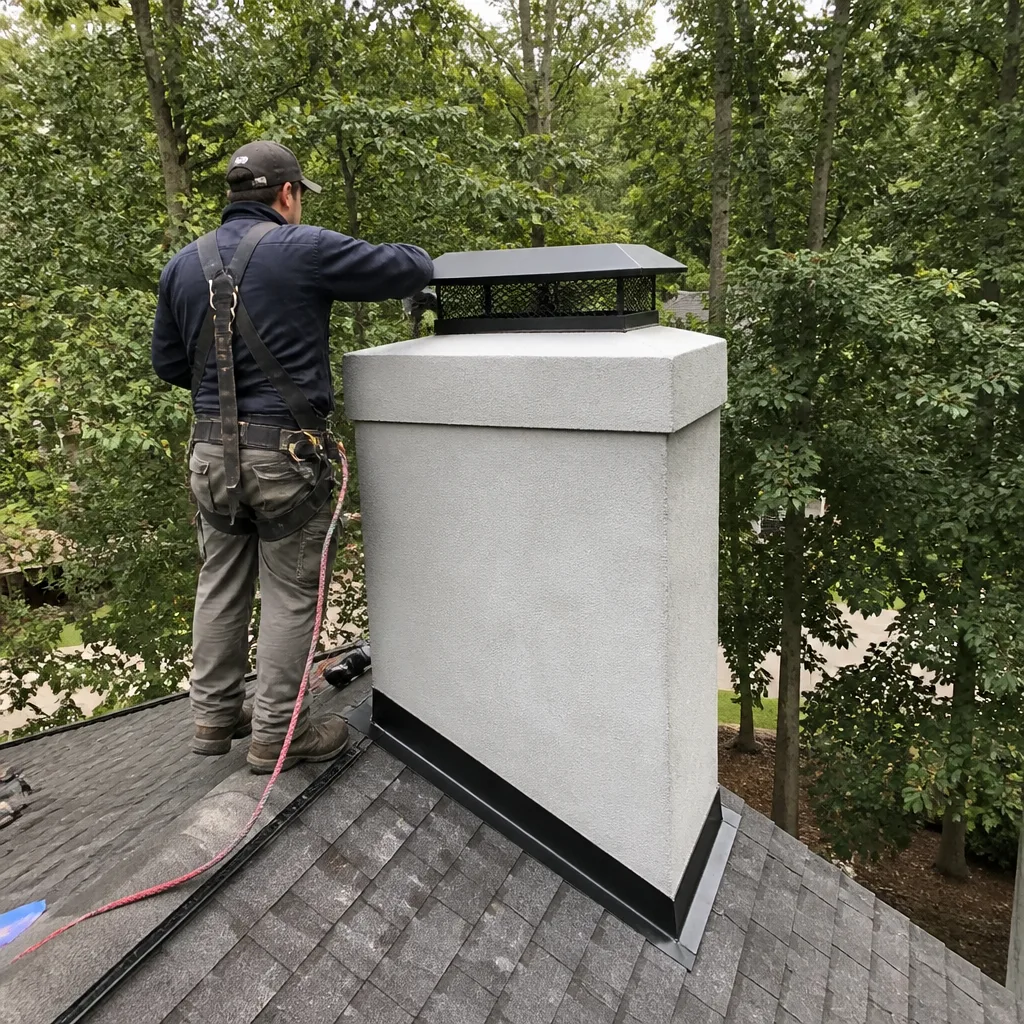
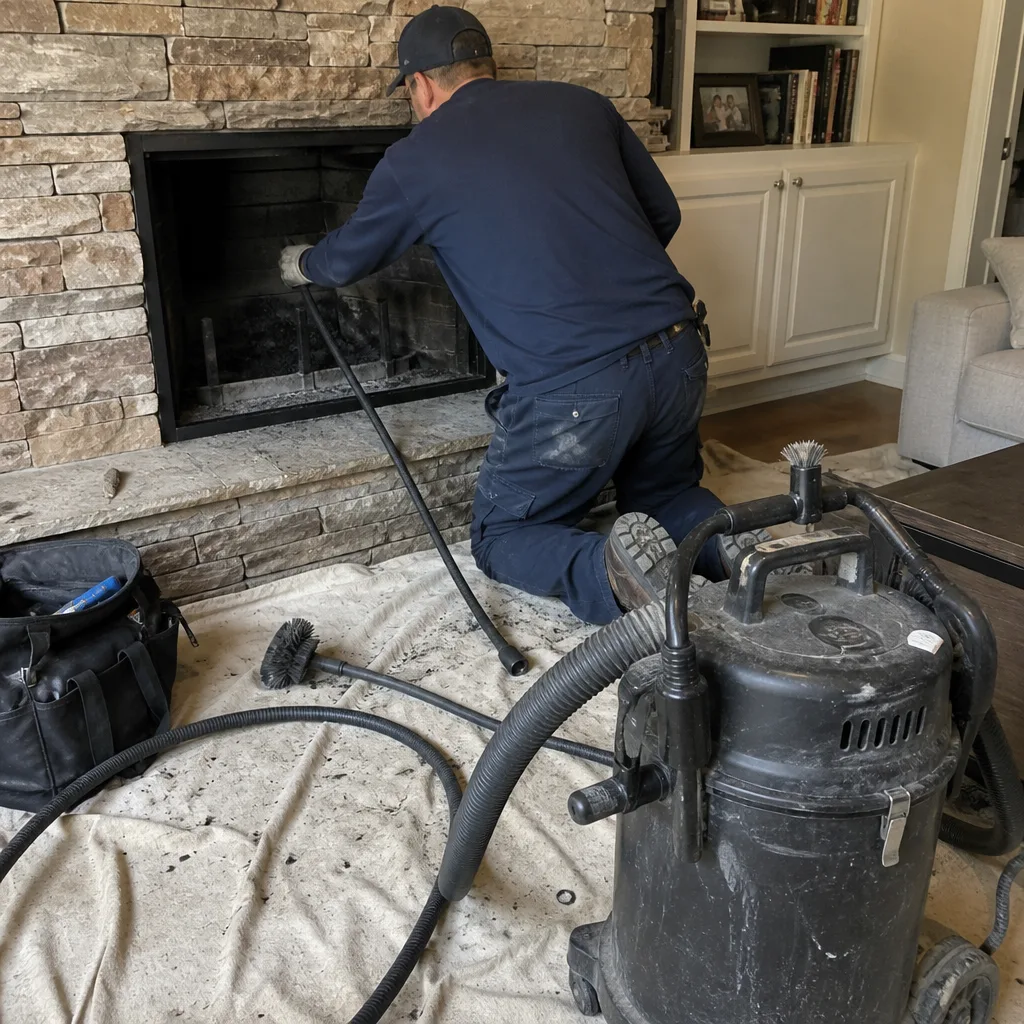
See the difference
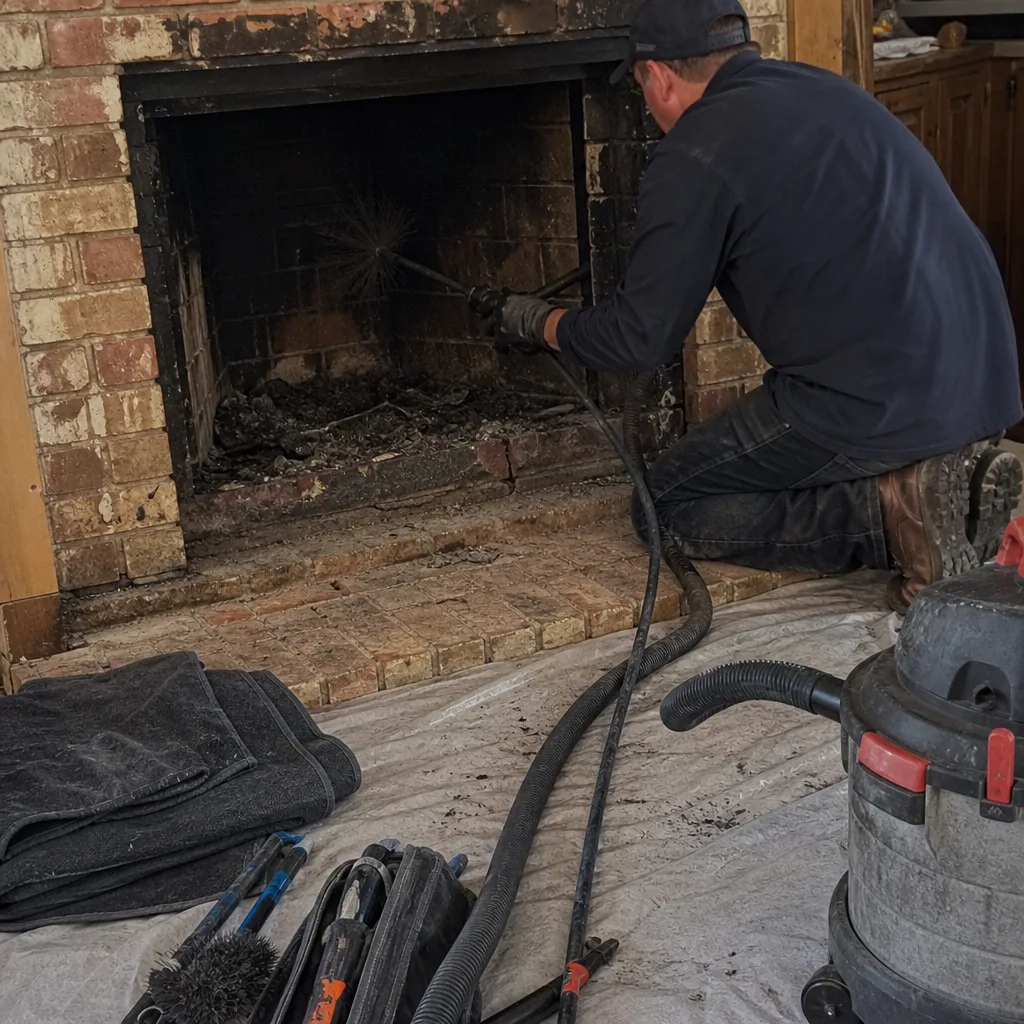 Before
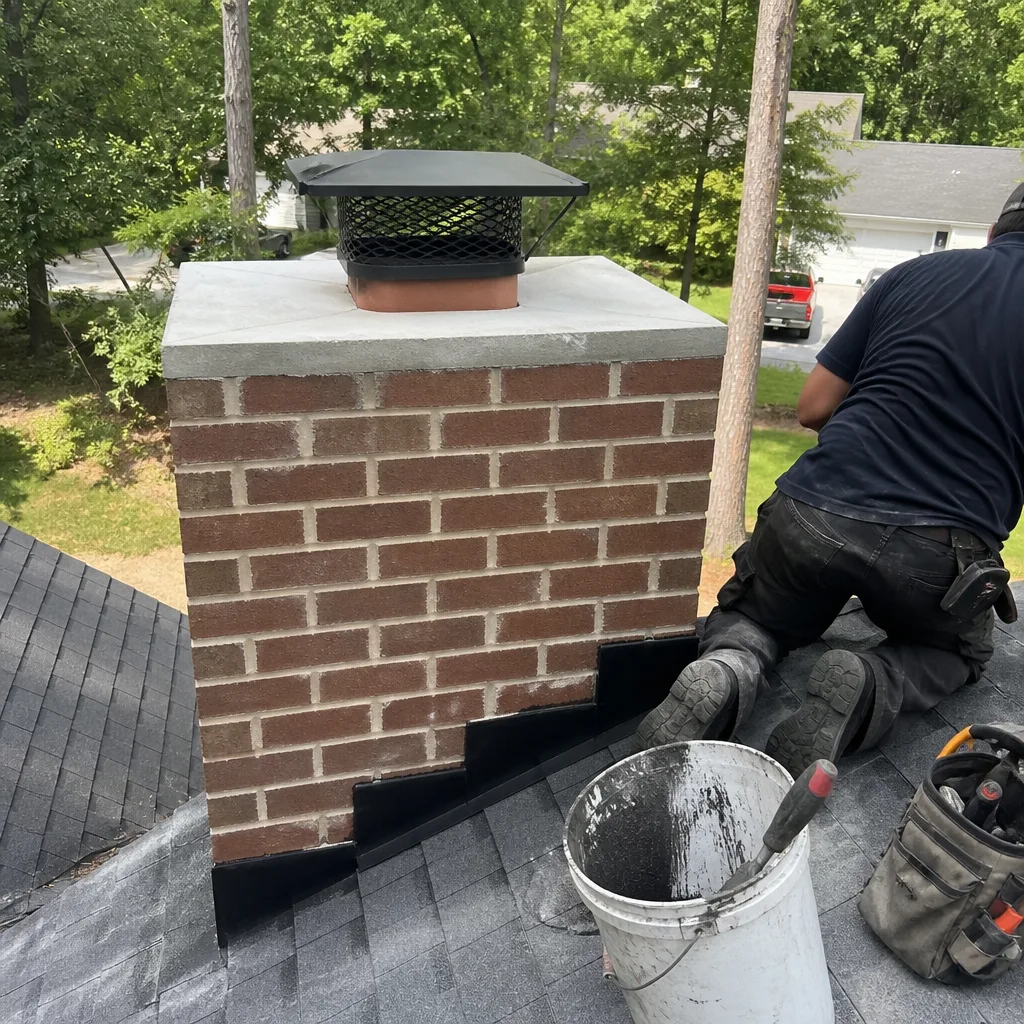 After
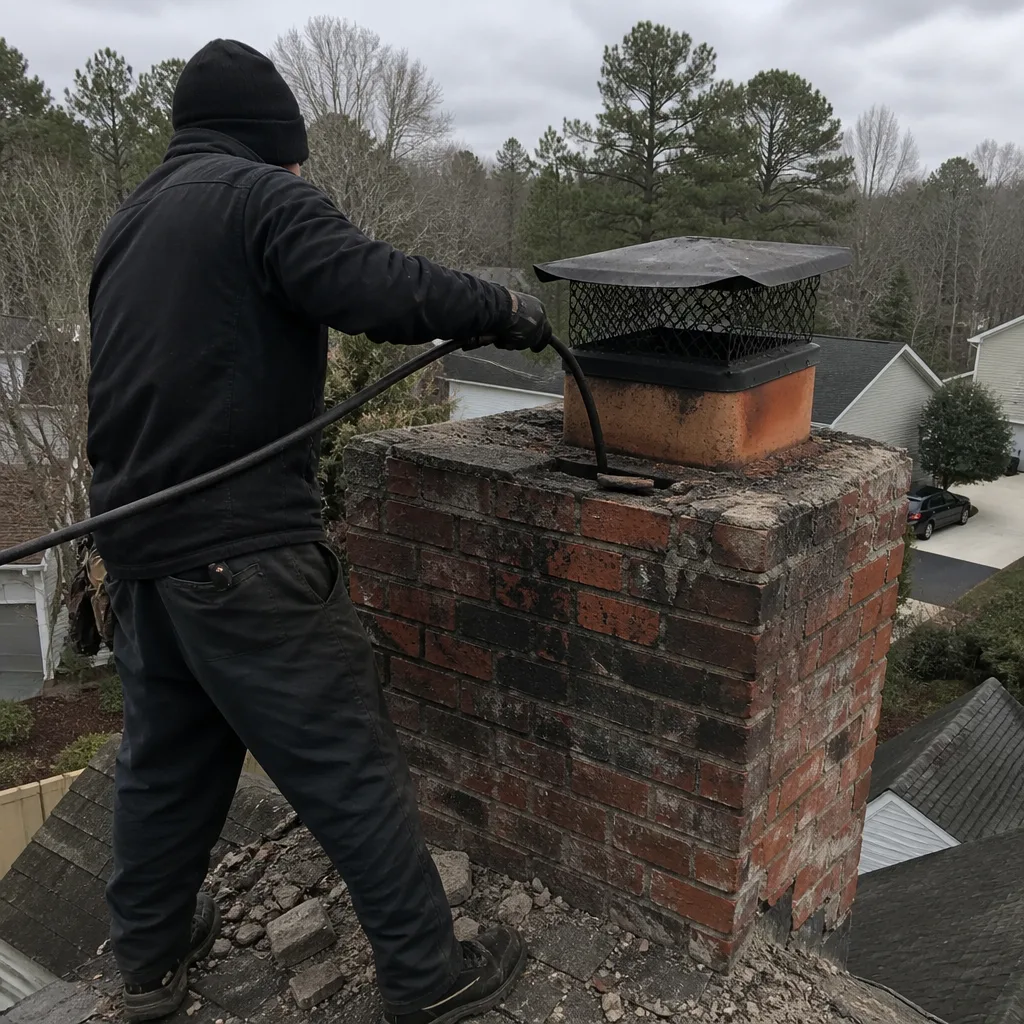 Before
 After
 Before
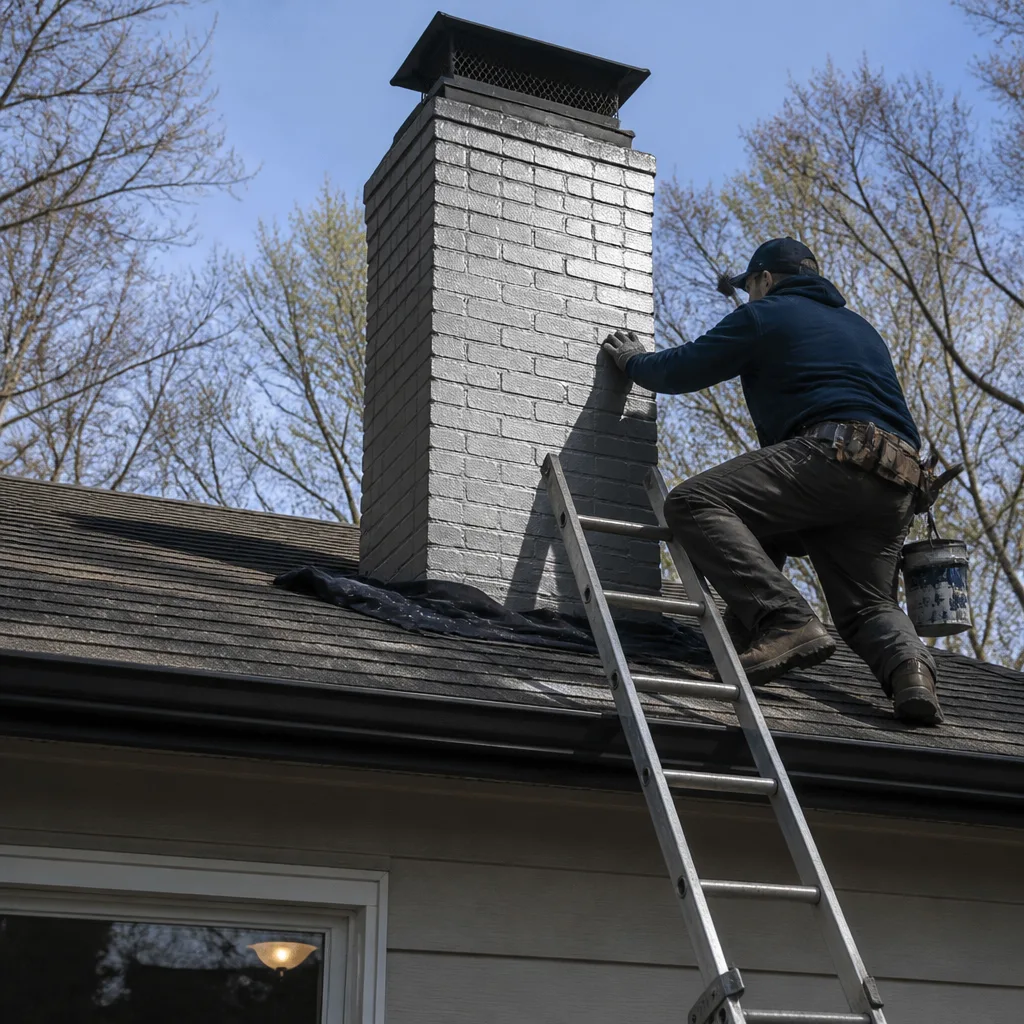 After
When to Call a Professional
You should schedule a chimney cleaning if you have used your fireplace more than about forty fires since the last sweep, if you notice a strong smoky odor when the fireplace is not in use, if you see visible creosote buildup in the firebox or flue, or if your last cleaning was more than a year ago and you plan to use the fireplace this season. You should schedule an inspection immediately if you hear or see animals in the chimney, notice water staining on the ceiling near the flue, or smell a chemical or smoky odor that persists when the fireplace is cold. These are not emergencies, but they are signals that something has changed. Kindling Chimney Sandy Springs offers free estimates in Sandy Springs. Call (229) 459-1048 to schedule an inspection or sweep.
Frequently Asked Questions
Most standard chimney sweeps in Sandy Springs run between $180 and $340, depending on flue length, creosote stage, roof access, and whether the chimney has been cleaned before. The price should be delivered as a written estimate before work begins, and any deviation should be explained and approved in writing. For an exact quote, call (229) 459-1048 and we will provide a written price after inspecting the chimney.
You need a new liner when the existing one has cracks, gaps, or deterioration that a camera inspection demonstrates. Not every crack requires a full liner replacement; sometimes a repair or resurfacing is appropriate. The key is evidence: never accept a liner recommendation without seeing camera photos of the damage. We show every customer exactly what the camera found before we recommend a liner product. When a liner is needed, we use professional-grade materials from brands like DuraFlex, HeatShield, Olympia Chimney, and Copperfield.
According to the Chimney Safety Institute of America, a chimney should be swept when there is 1/8 inch or more of creosote buildup, which for most homes in Sandy Springs translates to about once per year if you burn regularly. Homes that burn unseasoned wood or use the fireplace daily may need two sweeps per season. The precise interval depends on your wood, your fire habits, and your chimney design, which is why regular inspections matter as much as the sweep itself. For a full breakdown of what an inspection involves, see our Chimney Inspection in Sandy Springs page.
If you skip a cleaning, creosote accumulates in the flue and smoke chamber. Stage three creosote is a hardened, fuel-rich coating that can ignite in a chimney fire under the right conditions. At minimum, heavy creosote reduces draft, which pushes smoke back into the home and leaves soot on walls and furniture. A skipped cleaning also means skipped inspections, which is where cracked tiles and damaged dampers get caught. The cost of a sweep is small compared to the cost of a chimney fire or a smoke-damaged living room. If you are not sure whether your chimney is overdue, we offer honest guidance based on what we see, not a sales script.
A standard chimney sweep takes about 45 to 60 minutes from setup to breakdown, with an additional 30 minutes for the inspection. For a full sweep and inspection, you should plan for roughly two hours in the home. The exact time depends on creosote stage, flue length, and whether the technician needs roof access. Before any work begins in your Sandy Springs home, you will know exactly how long the technician expects to be there and what you need to do to prepare.
Yes. If the sweep or inspection identifies a problem with your fireplace, damper, or firebox, we can provide Fireplace Repair in Sandy Springs with written recommendations before any work proceeds. The process is the same as the sweep: camera evidence, a written explanation of the issue, a written estimate, and no pressure. Many fireplace issues can be repaired during the same visit or scheduled soon after, depending on parts availability and the nature of the damage.
The Bottom Line
Hiring a chimney cleaning contractor in Sandy Springs is not about finding the cheapest price or the most persuasive salesperson. It is about finding a company that will write things down before work begins and stand behind what they wrote. Georgia gives you no licensing safety net, which means your only real protections are certification, documentation, and a local reputation you can verify. Demand the four written documents: scope of work, itemized estimate, cleanup commitment, and warranty terms. Verify the certification belongs to the person at your door. Ask the three questions that reveal whether a contractor knows their trade. And remember that the best hiring decision is the one that makes the process boring and predictable: a written price, a clean floor, and a done-right promise you can hold a company to. That is the standard we built the Cedarwell Care Promise around, and it is the standard you should accept from any chimney professional in Sandy Springs.
To schedule a chimney inspection or sweep with a written estimate, call Kindling Chimney Sandy Springs at (229) 459-1048. A live person answers every call, 24 hours a day, 7 days a week.
Written by Danny Cortes, Owner at Kindling Chimney Sandy Springs, serving Sandy Springs since 2003.