
Last updated October 15, 2026
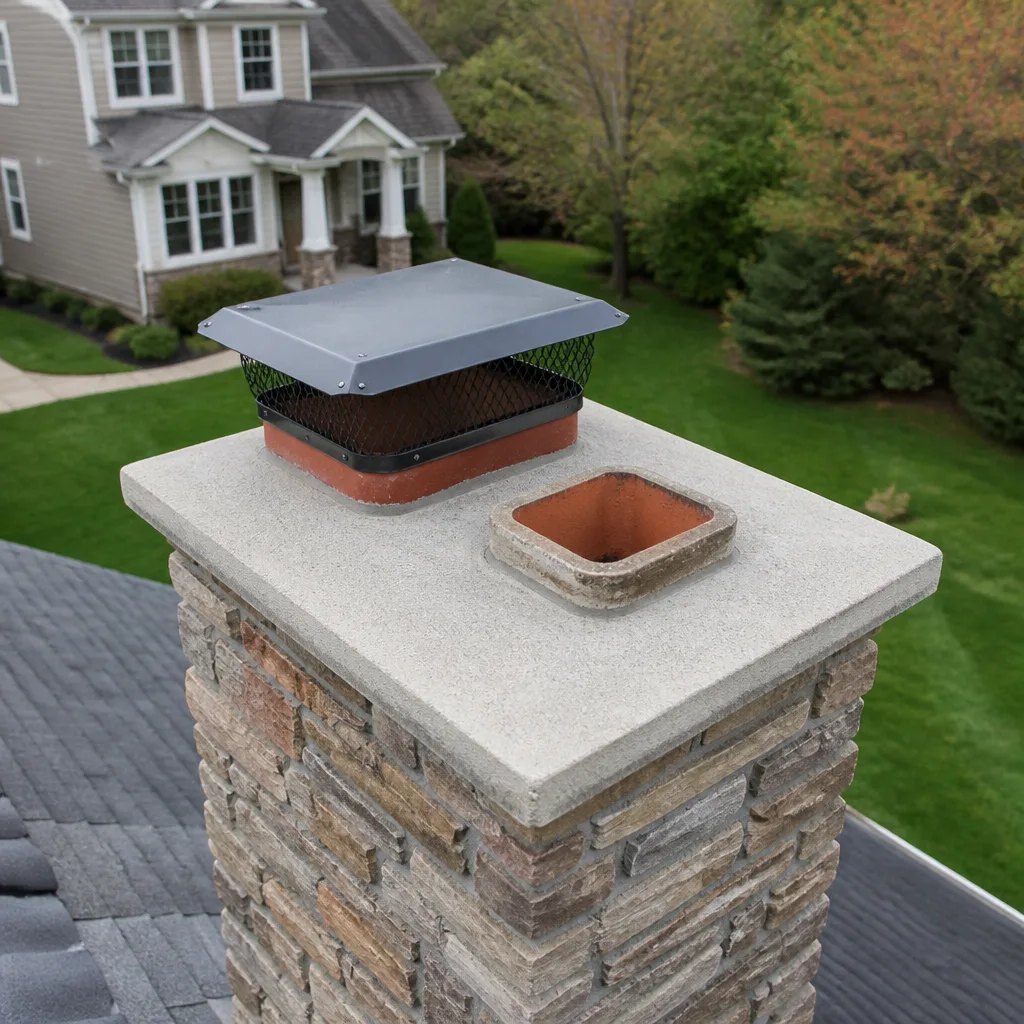 Sweep & inspection
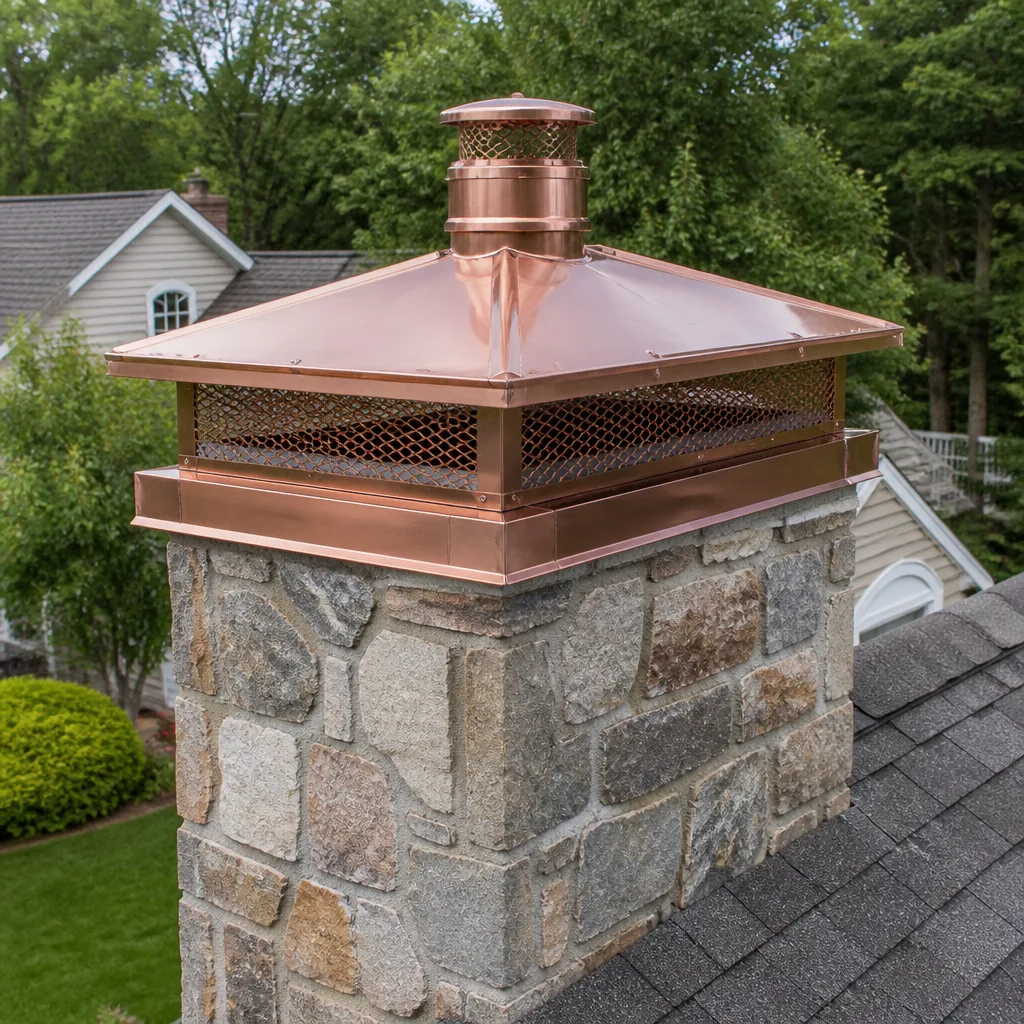 Caps & crowns
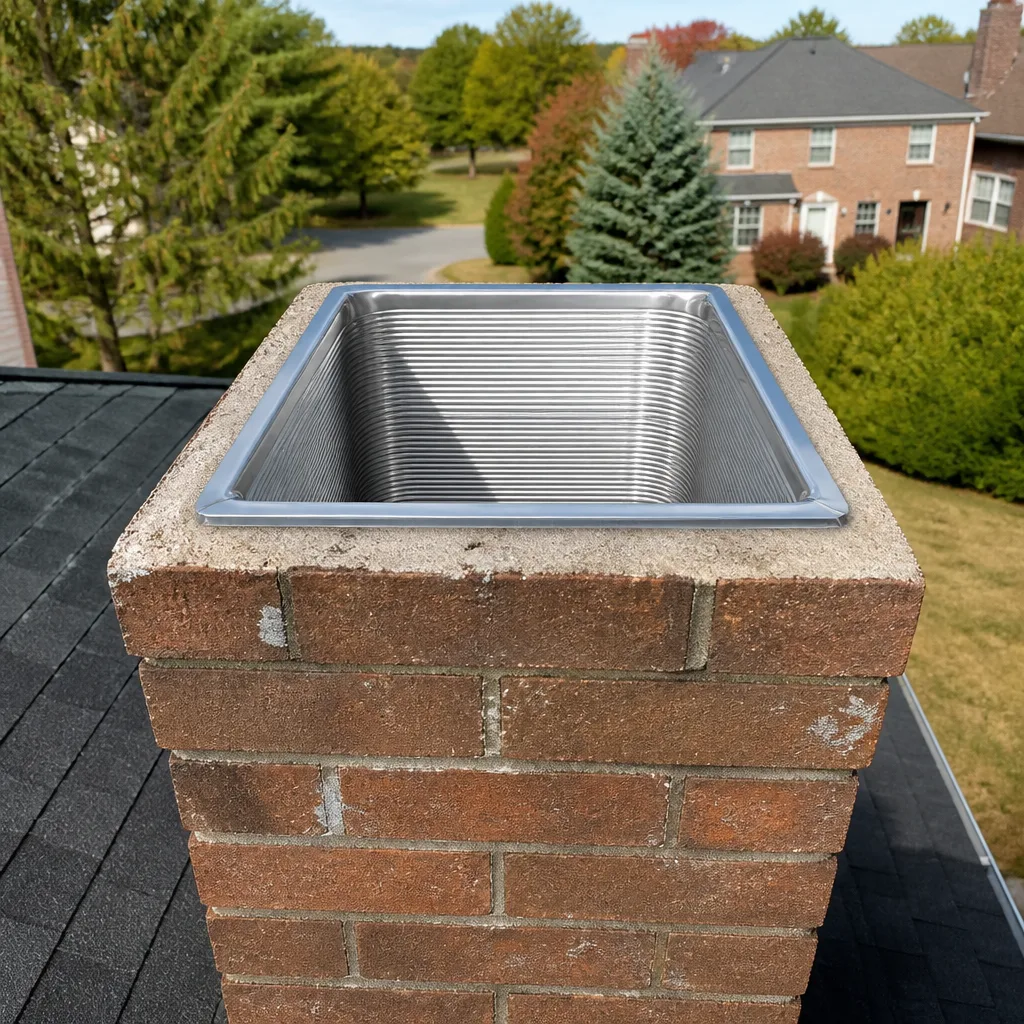 Flue relining
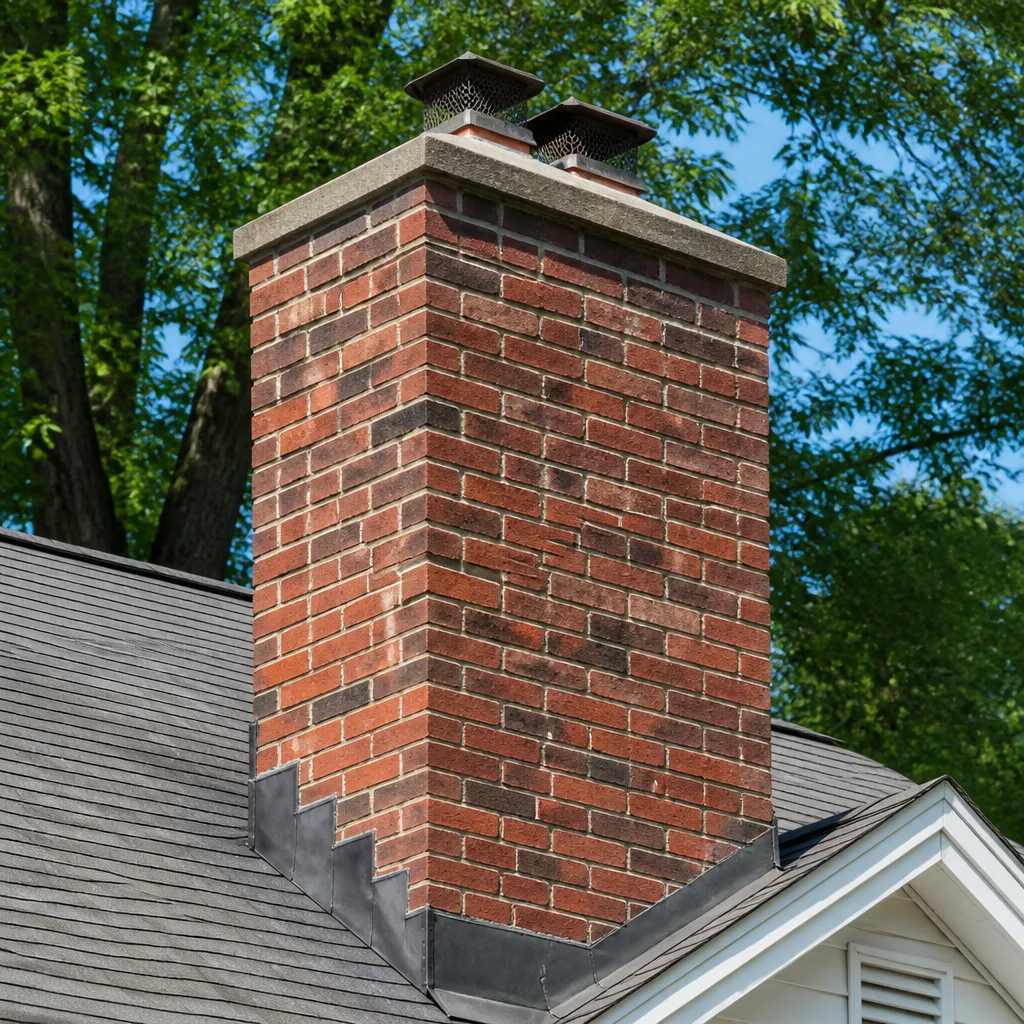 Masonry repair
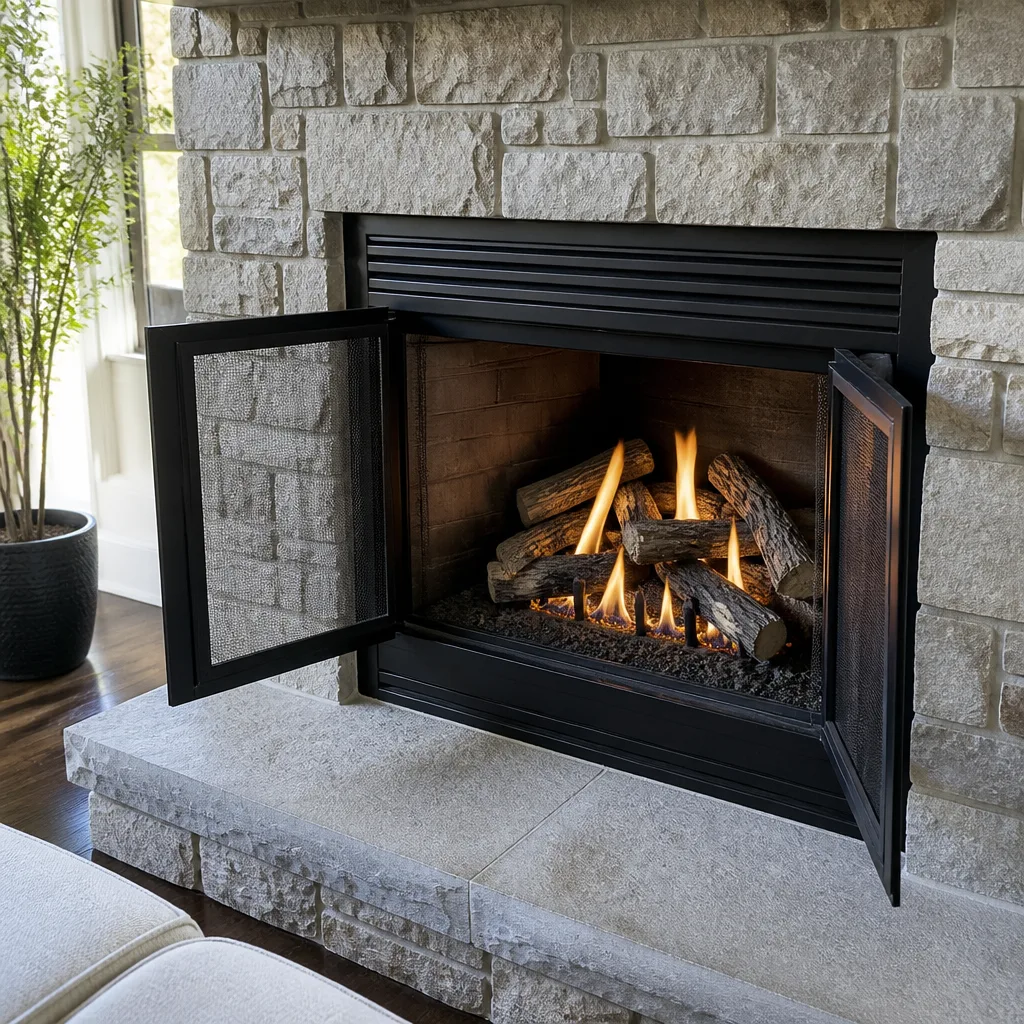 Gas fireplace service
Level 1 sweep and inspection to the NFPA 211 annual standard - flue, crown, cap, and flashing checked and photographed
Chimney sweep logs do not sweep chimneys. They loosen some creosote - which then falls where a brush and vacuum still have to collect it.
Chimney Cleaning Permits, Codes & Inspections in GA: What You Need to Know
Most Sandy Springs homeowners assume any chimney work comes with a thick folder of permits and inspections. The truth is closer to the opposite: routine cleaning requires nothing more than a competent sweep. The real trap lives in the space between a simple sweep and a repair, where Georgia’s adopted building code quietly requires permits that many contractors never mention. This guide walks you through exactly which chimney services trigger code requirements in Georgia, which Fulton County office handles what, and the one question that protects your insurance and your future home sale. For The Complete Guide to Chimney Cleaning in Sandy Springs and related resources, see our blog.
Quick Answer
Chimney Cleaning Warning Signs: A Sandy Springs Homeowner’s Reference Guide aside, routine chimney cleaning and visual inspections do not require a permit anywhere in Georgia. However, liner replacement, masonry rebuilds, and structural fireplace repairs do require a permit in Sandy Springs because the city enforces the Georgia State Minimum Standard Codes, which adopt the International Residential Code (IRC) with Georgia amendments. If a contractor performs repairs without pulling the required permit, that work can be flagged as a disclosure defect when you sell your home and may be excluded from insurance claims.
Styles & brands we work with
Table of Contents
- Georgia’s Chimney Code Foundation: What the IRC Actually Requires
- Which Chimney Services Require a Permit in Sandy Springs? The Full Matrix
- Fulton County and Sandy Springs: Where Permits Are Pulled
- NFPA 211 Inspection Reports: What a Compliant Report Looks Like
- Unpermitted Repairs and Homeowner’s Insurance: The Hidden Risk
- The One Question to Ask Any Contractor Before Repairs Begin
- Common Mistakes to Avoid
- When to Call a Professional
Georgia’s Chimney Code Foundation: What the IRC Actually Requires
The Georgia State Minimum Standard Codes are a set of construction codes adopted by the state legislature and enforced at the local level. For one- and two-family homes, Georgia adopts the International Residential Code with specific Georgia amendments. Chapter 10 of the IRC covers chimneys and fireplaces, and Georgia’s amendments change a handful of details but keep the core structure intact. This adoption-by-reference means a chimney liner replacement done without a permit in Sandy Springs isn’t a paperwork oversight. It’s a code violation documented in state law.
The IRC provisions that affect chimney work center on three things: clearance to combustibles, structural integrity, and liner requirements. Here’s what that means in plain English:
- Clearance to combustibles: Masonry chimneys must maintain at least 2 inches of air space from wood framing unless the chimney is built with a liner that meets UL 1777 or equivalent standards. This is the single most common failure found during a Chimney Inspection in Sandy Springs.
- Structural integrity: The code requires that chimney walls be at least 4 inches thick for residential masonry chimneys, with footing requirements tied to soil conditions. Sandy Springs’ red clay soil expands and contracts with moisture, which is why we regularly see cracked crowns and shifted brick in neighborhoods like Dunwoody Panhandle and Riverside.
- Liner requirements: Every masonry chimney serving a fireplace or appliance must have a liner made of approved material, typically clay tile or a UL-listed metal liner. A cracked flue liner moves a chimney from “needs cleaning” to “needs a permitted repair.”
Georgia’s amendments are sparse but real. The state code does not relax the IRC’s chimney provisions, and in some cases, Georgia’s fire code annexes bring in NFPA 211 by reference for existing systems. That’s the code pathway that governs when an existing chimney must be brought up to current standards during a repair or renovation, a distinction we’ll cover in the inspection section below.
For Sandy Springs homeowners, enforcement runs through the city’s Community Development Department, which handles building permits as part of a unified development services div. But the code itself originates at the state level, which means the same rules apply whether your chimney is in Sandy Springs, Roswell, or anywhere else in Fulton County. What changes is the local office that processes the paperwork.
Which Chimney Services Require a Permit in Sandy Springs? The Full Matrix
The answer to “does this chimney job need a permit” depends on what the technician actually does while standing on your roof. Here’s the matrix we use with our customers, drawn from our Chimney Sweep Maintenance Checklist for Sandy Springs Homeowners, and it matches what Fulton County and Sandy Springs code officials apply in practice:
| Service | Permit Required in Sandy Springs? | Why |
|---|---|---|
| Chimney sweep (brush and vacuum cleaning) | No | Classified as routine maintenance; no structural or system modification. |
| Level 1 visual inspection | No | Non-invasive assessment; no repair work performed. |
| Level 2 camera inspection | No | Diagnostic only; no change to the chimney system. |
| Chimney cap replacement | No | Accessory replacement; does not alter liner, masonry, or flue dimensions. |
| Minor masonry repointing (small mortar joints) | No, with a caveat | Cosmetic mortar repair typically falls below the permit threshold, but structural masonry work (crown rebuild, brick replacement) does not. |
| Full crown rebuild | Yes | Alters the chimney structure and affects water intrusion performance. |
| Liner repair (HeatShield resurfacing) | No | The HeatShield system is a UL-listed repair method that does not remove or replace the flue structure. |
| Full liner replacement (Famco or Olympia Chimney stainless steel liner) | Yes | Modifies the chimney’s flue system; requires inspection to confirm clearance and UL listing compliance. |
| Firebox rebuild or fireplace repair | Yes | Structural modification inside the firebox opening; meets permit threshold. |
| Chimney tear-down and rebuild | Yes, plus engineered drawings likely | Major structural alteration; engineering review required in Sandy Springs. |
The caveat on repointing matters. Sandy Springs code officials generally don’t require a permit for small-scale mortar touch-ups, but if the repointing area covers more than about a third of a chimney face or extends into the flue liner, they treat it as structural repair. When we run a Fireplace Repair in Sandy Springs, we always confirm the permit path before any mortar leaves the bag.
One specific distinction worth understanding: HeatShield liner repair uses a cerfractory material applied over the existing flue to seal surface cracks and gaps. Because the original flue remains in place and the repair is classified as a liner surface restoration under UL listing guidelines rather than a liner replacement, Georgia code does not trigger a permit. Gelco and similar products fall into the same category. A full stainless steel reline with Famco or Olympia Chimney components, by contrast, removes the functional flue from service and installs a new system, which is a code event.
Fulton County and Sandy Springs: Where Permits Are Actually Pulled
Sandy Springs operates under its own building department, separate from unincorporated Fulton County. That’s a distinction with practical consequences. If your contractor says they don’t need a permit “for this area,” they may be looking at unincorporated county rules, not city rules. Here’s what Sandy Springs homeowners need to know about the actual permit path.
The City of Sandy Springs Community Development Department processes building permits through its online portal and in-person counter at City Hall on Mount Vernon Highway. Typical residential chimney permits are reviewed at the counter level, meaning no long architectural review cycle for most liner replacements and masonry rebuilds. Engineering review can wall up for larger structural work, though rarely beyond a week or two.
The contractor pulling the permit must hold a valid Georgia state contractor’s license for residential work and be registered with the city to do business in Sandy Springs. The permit fee for a standard chimney repair typically falls in the $75 to $175 range depending on the job’s valuation, though that number moves with each budget cycle and the city’s current fee schedule.
Here’s the process a permitted repair follows, step by step:
- The contractor files a permit application online or at City Hall, listing the scope of work, the code sections that apply, and the job’s estimated valuation.
- The city reviews the application at the counter level and issues the permit, typically within 1 to 3 business days for standard chimney repairs.
- The contractor performs the work according to the approved scope and the applicable IRC sections.
- A city inspector visits the job site to verify the work before it’s covered or closed up. For liner replacements, the inspector verifies the liner’s UL listing and clearance to combustibles.
- The inspector signs off, the permit closes, and the homeowner receives a final inspection record. That record is the document you’ll want when you sell your house.
Some homeowners ask if they can pull the permit themselves. The city allows homeowners to pull permits for work on their own primary residence, but the work still must meet code, and the homeowner assumes liability for the outcome. In practice, most Sandy Springs families find it simpler to hire a contractor who pulls the permit, handles the inspection, and delivers the closed permit file at the end. We do this on every job that requires it, and we hand over the paperwork without being asked.
NFPA 211 Inspection Reports: What a Compliant Report Looks Like
NFPA 211 is the National Fire Protection Association standard that governs chimneys, fireplaces, and venting systems. It defines three levels of chimney inspection, and it’s the document your insurance company will reference if you ever file a chimney-related claim. Understanding what a compliant report contains protects you twice: once at inspection time, once at claim time.
The three levels break down this way:
- Level 1 inspection: A visual check of accessible portions of the chimney, typically performed during a routine sweep. A Level 1 report documents what was visible, what condition it was in, and whether the system is clear for continued use. Most annual Chimney Sweep in Sandy Springs visits include a Level 1 inspection and a written report is delivered without being requested.
- Level 2 inspection: A more thorough inspection, typically requested when the chimney system has changed, when the property is being sold, or when an event like a chimney fire or lightning strike has occurred. A Level 2 report includes camera footage of the flue interior and photo documentation of accessible attic and crawl space clearances.
- Level 3 inspection: The most invasive level, required when a Level 2 inspection finds a problem that requires opening up concealed structure to diagnose. A Level 3 inspection report includes the findings from any removed building components and a recommended repair plan.
A compliant NFPA 211 report includes specific elements that a casual inspection summary won’t have:
- The exact date and time of the inspection, and the technician’s name and credential.
- A clear statement of which NFPA 211 level was performed.
- Photos or camera stills of the flue interior and any areas of concern.
- Specific measurements of the flue dimensions, hearth extension, and clearance to combustibles.
- A written “clear for use” or “not clear for use” determination.
- When applicable, a written recommendation for a Level 2 or Level 3 inspection with the reason stated.
You’re entitled to receive that report automatically. A sweep that does the work and hands you nothing but a receipt hasn’t delivered an inspection. Our standard practice in Sandy Springs is a written Level 1 report on every visit, and if the camera finds something, we schedule a Level 2 before we recommend any repair. The technician walks the report with you, line by line, and you keep the copy.
Unpermitted Repairs and Homeowner’s Insurance: The Hidden Risk
This is the section most guides skip. It’s also the most expensive to ignore. When a chimney repair is performed without a required permit, the work exists in a legal gray zone that your insurance carrier has no problem finding after a claim.
Here’s how the chain works. Georgia’s property disclosure laws require sellers to disclose any material defects in the home, and the standard Georgia Association of Realtors disclosure asks directly about unpermitted work. If a previous owner replaced a chimney liner without a permit, that fact can surface during a buyer’s inspection. The buyer’s lender may refuse to finance the property until the work is retroactively permitted and inspected. And the buyer can rightly demand the seller cover that cost.
But the insurance angle runs deeper. When a homeowner files a chimney fire claim, the insurer investigates the chimney’s maintenance and repair history. If the investigation finds that the liner was replaced without a permit, the insurer can argue the work was not performed to code and deny the claim on that basis. The homeowner is left with a fire-damaged house and no payout. That’s not hypothetical. It’s a pattern we’ve heard from Sandy Springs homeowners who inherited unpermitted work from a previous owner.
The math is simple: a permit costs between $75 and $175 and a few weeks of waiting. An unpermitted liner can wedge itself into a six-figure insurance dispute. The honest arithmetic favors the permit.
What about cleaning, though? Does a routine sweep trigger any of this? No. Cleaning is maintenance, not modification, and no permit exists for it. The line is crossed when the technician modifies the system, and that’s the line that matters for both your insurer and your sale.
The One Question to Ask Any Contractor Before Repairs Begin
Before any chimney repair starts on your Sandy Springs home, ask this question: “Does this work require a permit, and will you pull it?”
That single sentence accomplishes three things. It tells you whether the contractor knows the Georgia code, it tells you whether they intend to do the job legally, and it tells you whether they have standing with the city to do business here. A contractor who hesitates, says “oh, we don’t need permits for this,” or waves off the question is telling you what their work looks like on paper, which is exactly where it will matter years later.
Here’s what a good answer sounds like:
“Yes, this liner replacement requires a permit in Sandy Springs. We’ll pull it before we start, the city inspector will check it when we’re done, and we’ll close the permit and give you the final inspection record.”
Here’s how we answer it at Kindling Chimney Sandy Springs when a repair crosses the permit line: we name the permit, name the cost, pull it before any work, and put the closed permit in the homeowner’s hand. That’s part of how the 365-Day Done Right Promise works in practice. If the permit isn’t closed cleanly, the job isn’t done, and we make it right.
There’s no magic phrase that exempts a contractor from Georgia code. If the work modifies the chimney system and the matrix above says yes, a permit is required, end of sentence. A contractor who tells you otherwise is either uninformed or working outside the system, and neither one is who you want on your roof.
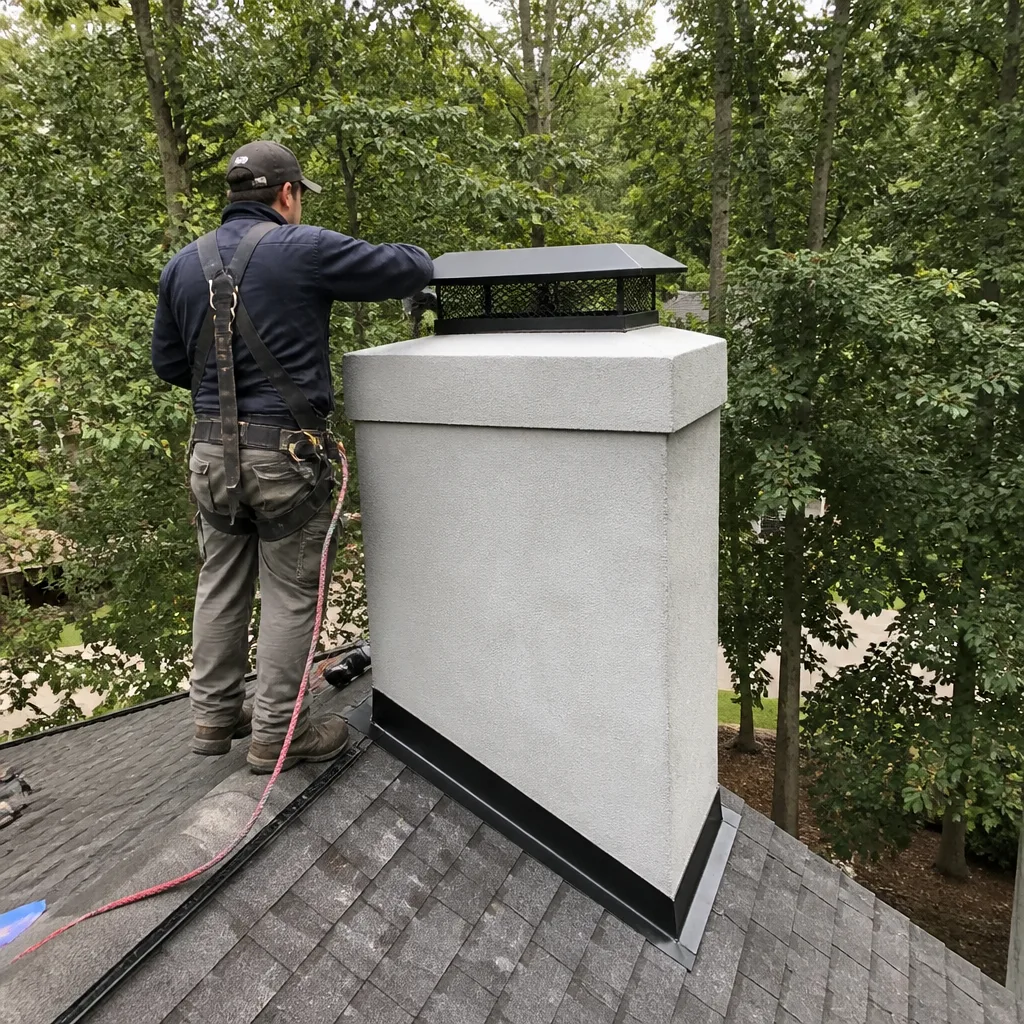
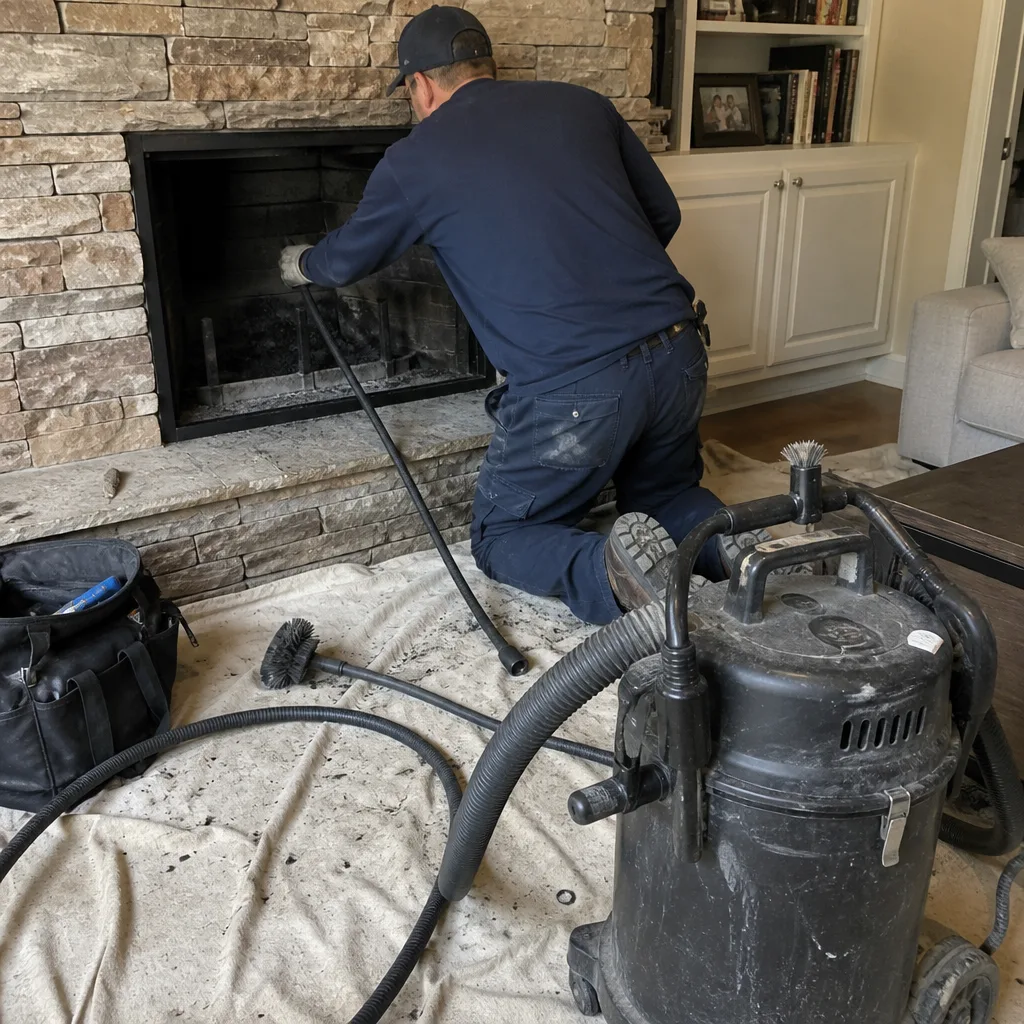
See the difference
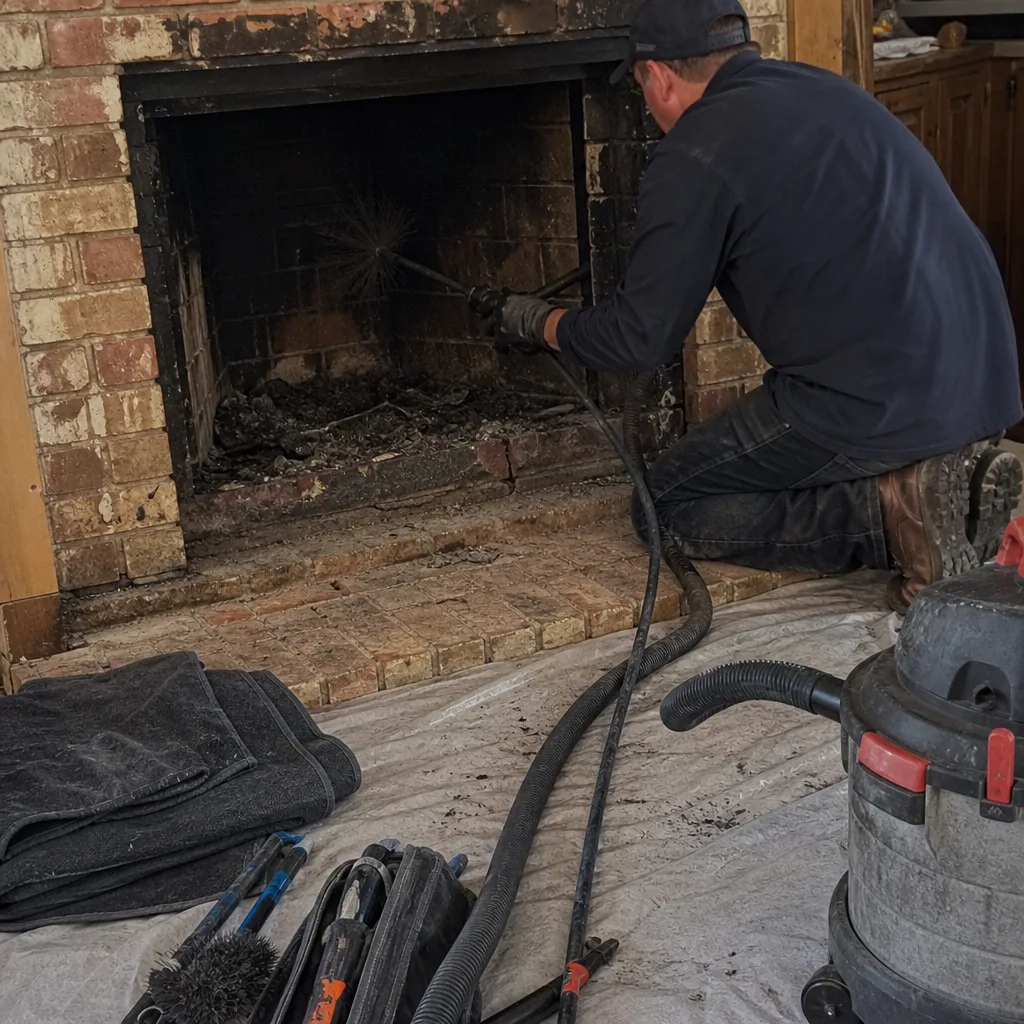 Before
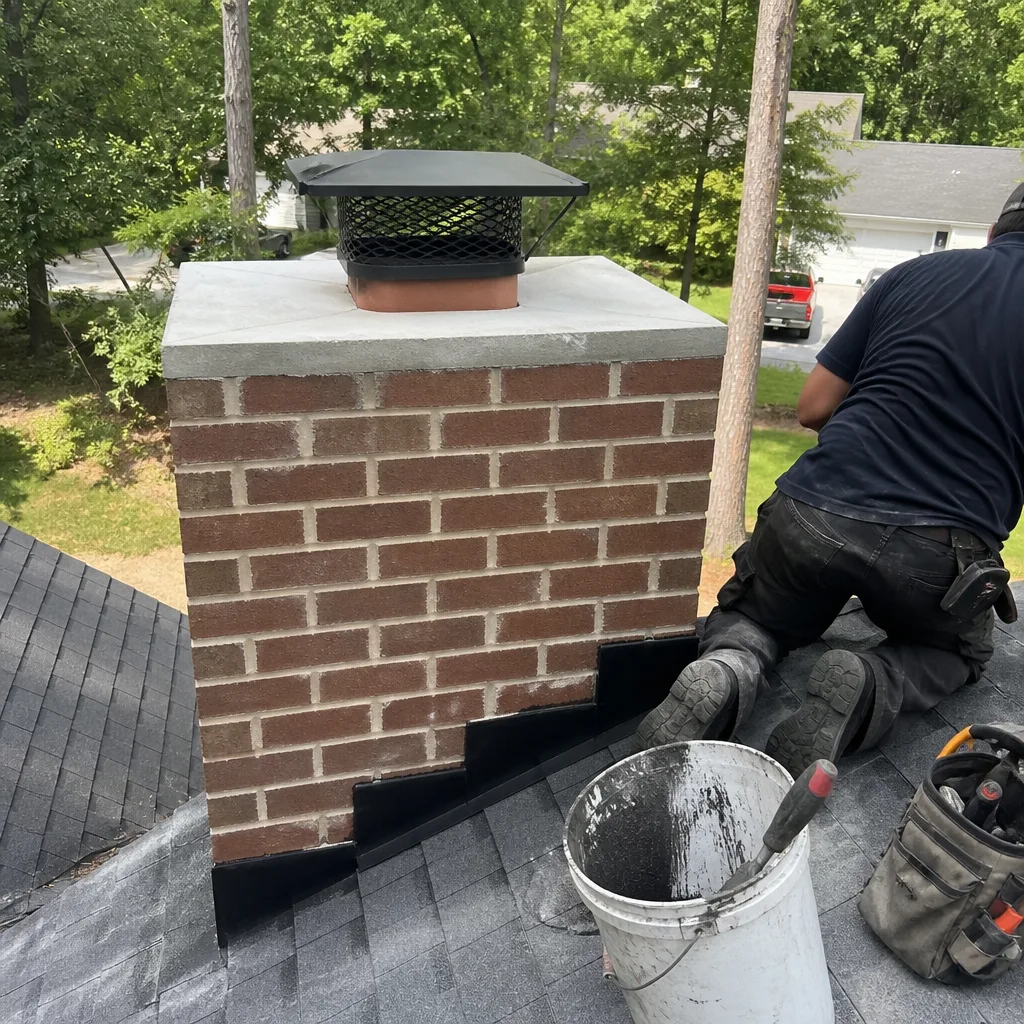 After
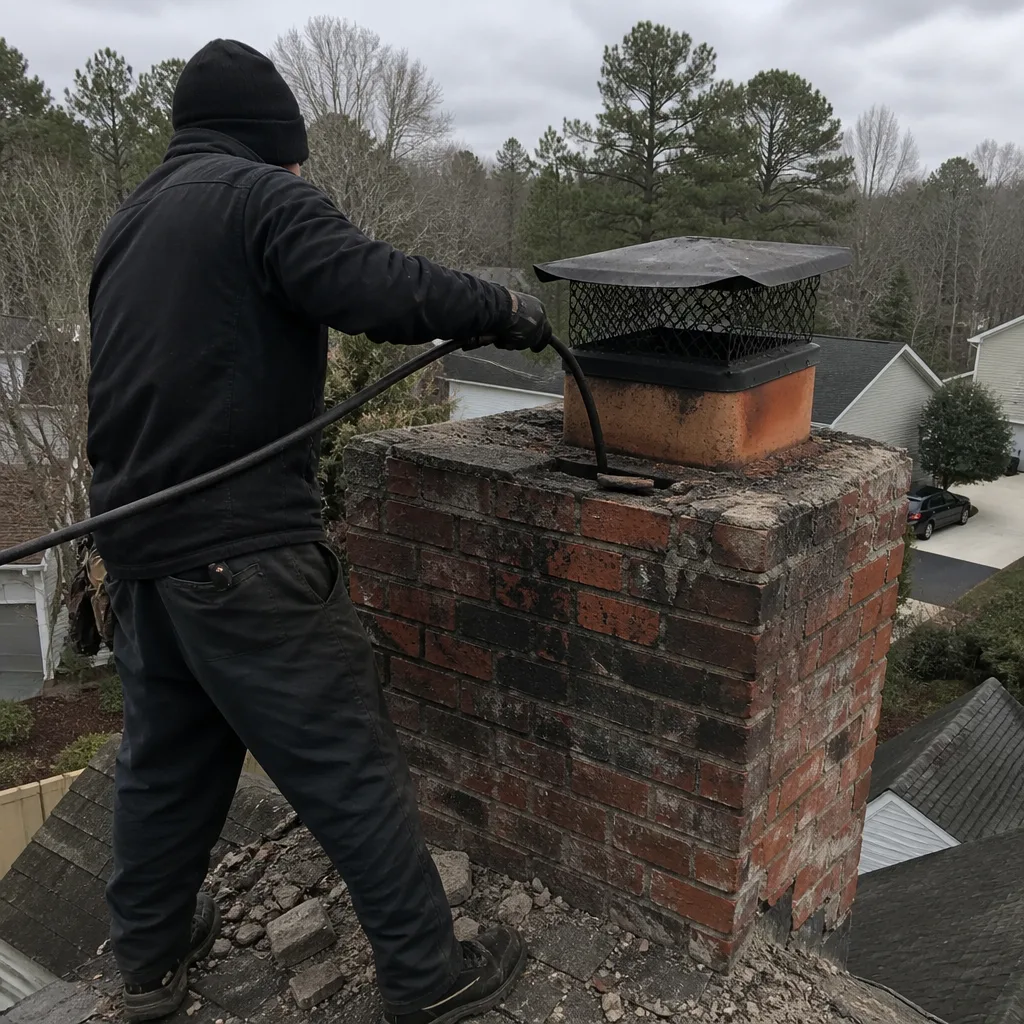 Before
 After
 Before
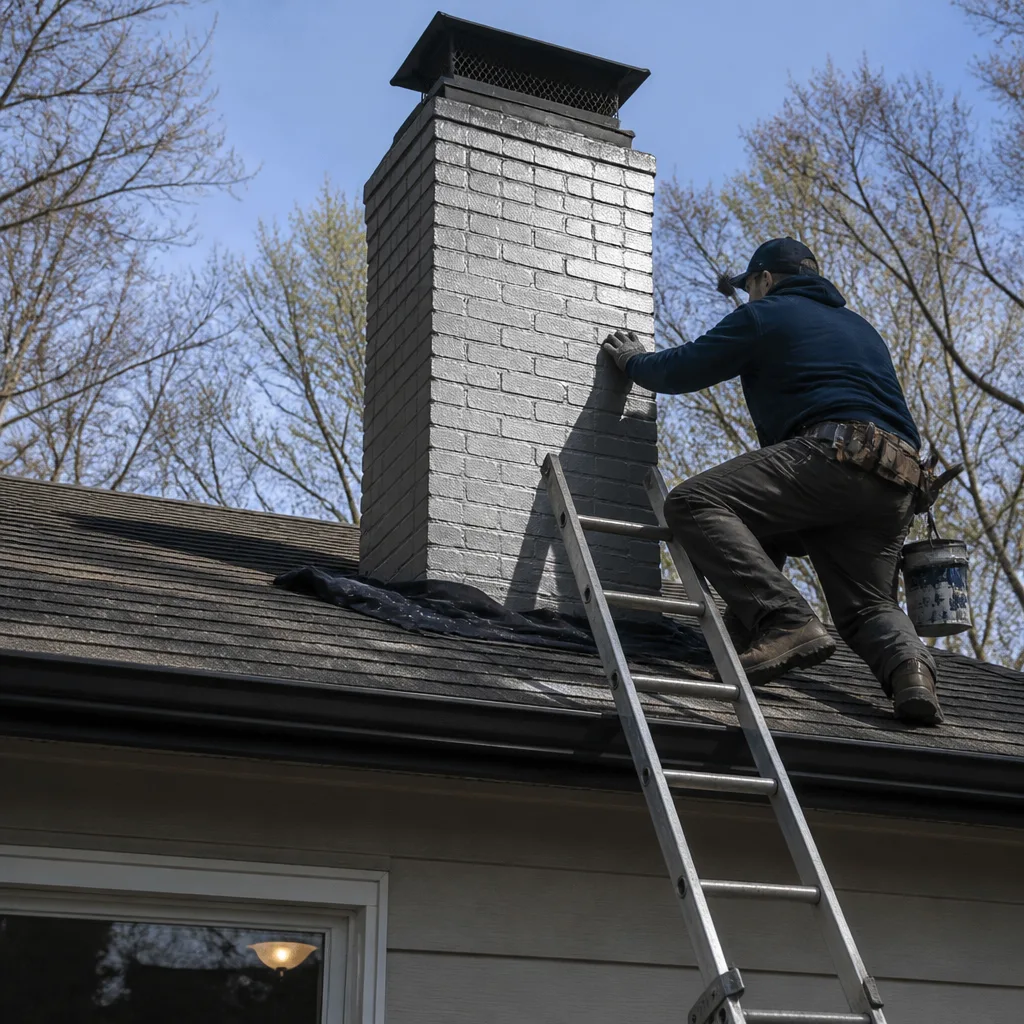 After
Additional Code Considerations Sandy Springs Homeowners Should Know
Beyond the permit matrix, a few Georgia-specific code details affect everyday chimney care decisions in Sandy Springs. These are the points that come up repeatedly in our work across the city.
Carbon monoxide and draft requirements: The IRC and Georgia amendments require that every chimney serving a fuel-burning appliance maintain proper draft to carry combustion gases out of the home. A chimney that fills with creosote restricts draft, and the code’s draft requirements are the legal backbone behind why regular cleaning isn’t just a good idea, it’s a code-recommended practice tied to the safe operation of the system.
Wood-burning fireplace restrictions in certain metro Atlanta areas: During the summer months, Georgia’s Environmental Protection Division issues air quality alerts that restrict wood burning in some metro counties. Sandy Springs sits in the Atlanta non-attainment zone, and the restrictions can apply on high-ozone days. A clean chimney burns more completely, which means less particulate matter in the first place. We tell our Sandy Springs customers this not as a scare tactic, but as a plain reading of the seasonal rules that affect when they can use their fireplace.
Insurance notifications after major events: If your chimney takes a lightning strike or suffers a chimney fire, your insurance policy likely requires you to notify the carrier. The subsequent claim investigation will want to see inspection records. Having a paper trail of swept-and-inspected history makes that conversation much easier. Kindling keeps records for every home, so history doesn’t disappear when a homeowner changes phones.
Common Mistakes to Avoid
- Assuming a chimney sweep is the same as an inspection. A sweep cleans; an inspection evaluates. Some companies do both, some only sell the sweep. If you’re handed no written report, you haven’t been inspected. Ask for the Level 1 report in writing.
- Letting a contractor do a permitted repair without pulling the permit. This is the most expensive mistake in the chimney industry. The work may look fine, but you’ve inherited a disclosure problem and a potential insurance denial. Ask the question every time.
- Trusting a low-ball estimate that skips the permit. Some Sandy Springs families take the cheap bid thinking they’re saving $100 and end up with thousands in retroactive permitting costs during a sale. The cheaper bid that skips permits isn’t cheaper.
- Ignoring a cracked flue because the fireplace look fine from outside. A cracked clay tile liner is invisible from the firebox and can allow heat transfer to combustibles. A Level 2 camera inspection is the only way to see it.
- Filing a chimney fire claim without an inspection history. Insurance adjusters look for the maintenance trail. No records, no receipts, no reports equals a longer, messier claims process. Start the paper trail with an annual inspection.
- Waiting for fall to book cleaning. Sandy Springs chimney companies book out six to eight weeks as soon as temperatures drop. Booking in late summer means you’re ready for the first fire instead of waiting on a list.
- Using the fireplace despite visible smoke or odor. Smoke backing into the room is a draft or obstruction problem. It means carbon monoxide is being pushed back into the living space. Stop using the fireplace and call for an inspection before the next fire.
When to Call a Professional
Call a professional when the fireplace shows any of these signs: smoke entering the room, a strong odor from the chimney even when the fireplace isn’t lit, animal sounds or nests, visible cracks in the masonry, or water stains on the ceiling near the chimney chase. Also call if it’s been more than a year since the last inspection and you plan to burn regularly through the winter. Routine sweeps and inspections run between $180 and $300 for most Sandy Springs homes, and any repair beyond that should come with a permit conversation and a written price before work starts. Kindling Chimney Sandy Springs home service area covers all of Sandy Springs, and we offer free estimates. Call (229) 459-1048 to schedule.
Frequently Asked Questions
No. Chimney cleaning is classified as routine maintenance, and no Georgia jurisdiction, including Sandy Springs, requires a permit for a sweep. The permit requirement activates only when the chimney system is modified, such as liner replacement or structural rebuilds. Any reputable sweep will tell you this openly.
Most standard chimney sweeps in Sandy Springs run between $180 and $300 depending on the chimney’s height, the amount of creosote, and whether a roof inspection is included. We deliver a written price before any work starts, so you’ll know the exact number before the brush touches the flue. Call (229) 459-1048 for a free estimate.
A Level 2 chimney inspection is a camera-based evaluation of the flue interior, attic clearances, and chimney exterior, performed when a property is being sold, when the chimney system has changed, or when a concerning event like a chimney fire has occurred. You’re entitled to a written Level 2 report with camera stills and a clear recommendation from the technician. This is the inspection we recommend before any home purchase in Sandy Springs.
Homeowner’s insurance typically covers chimney damage from sudden events like storms, lightning, or chimney fires, but it does not cover wear-and-tear repairs like cracked flue liners or deteriorated crowns. If a repair was performed without a required permit and a later claim arises, the insurer may deny coverage based on the unpermitted work. Keep your inspection and permit records in one folder.
The National Fire Protection Association says a chimney should be swept when creosote buildup reaches 1/8 inch or more, which for most Sandy Springs fireplaces means annually if you burn regularly. Homes that burn mostly soft woods or unseasoned wood may need sweeping more often. An annual inspection catches the buildup before it becomes a fire hazard.
Creosote accumulates on the flue walls over time, and a thick layer narrows the exhaust path. That restricts draft, pushes smoke back into the home, and creates a fuel-rich environment that can ignite into a chimney fire. In sandy, humid Georgia air, the creosote can also absorb moisture and accelerate flue tile deterioration. The fix is a routine sweep, which is always cheaper and safer than a rebuild. Call (229) 459-1048 for an exact quote, and we’ll work to your schedule.
The Bottom Line
Chimney cleaning in Georgia requires no permit, but the minute the work becomes a repair, the rules change. Sandy Springs enforces the Georgia State Minimum Standard Codes, which adopt the IRC, and that means liner replacements, firebox rebuilds, and structural masonry work all carry permit requirements. Unpermitted work follows you into insurance claims and home sales, and the fix is never cheaper than pulling the permit the first time. Ask the question before any repair, keep the paperwork after, and schedule an annual sweep so the system stays clean, coded, and insurable. For more guides & resources, visit our blog. If you’re in Sandy Springs, call (229) 459-1048 for a free estimate and a straight answer on what your chimney actually needs.
Written by Danny Cortes, Owner at Kindling Chimney Sandy Springs, serving Sandy Springs since 2003.