
Last updated October 15, 2026
 Sweep & inspection
 Caps & crowns
 Flue relining
 Masonry repair
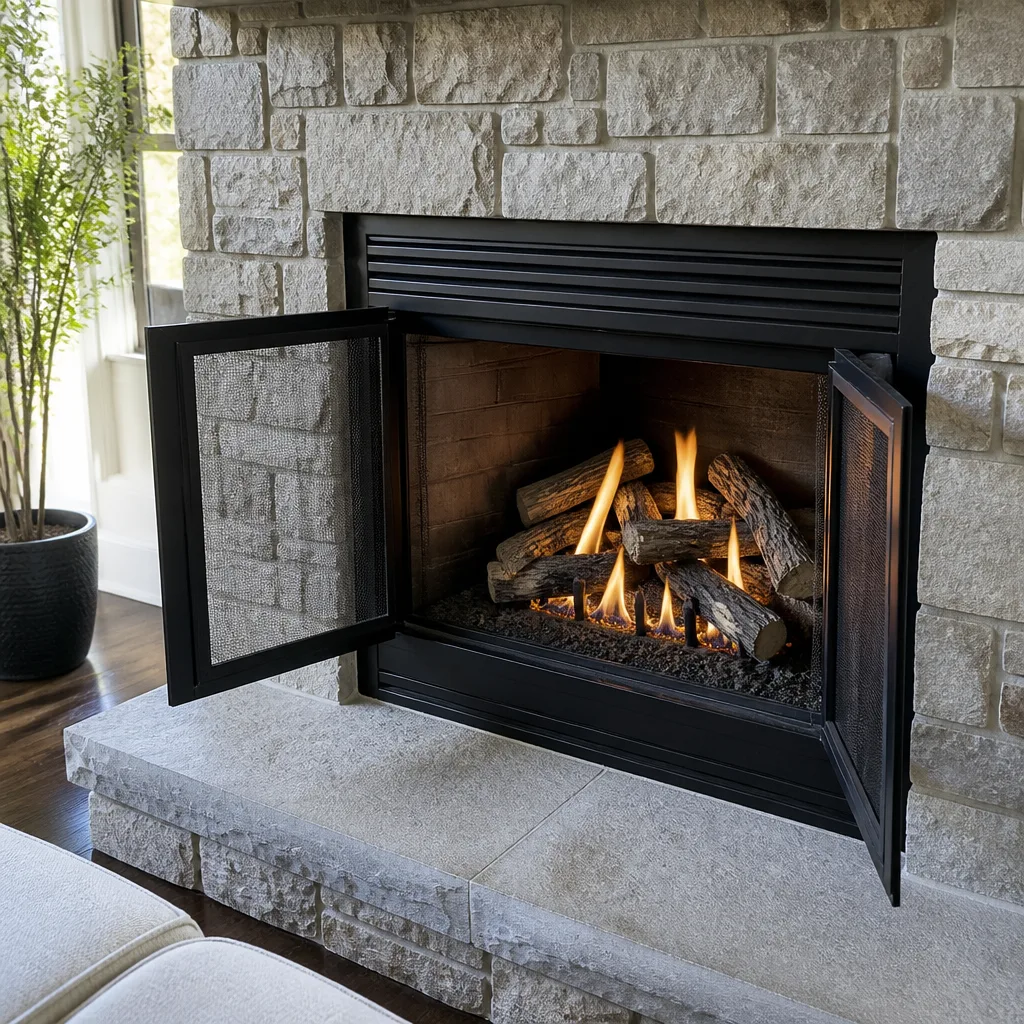 Gas fireplace service
Level 1 sweep and inspection to the NFPA 211 annual standard - flue, crown, cap, and flashing checked and photographed
Chimney sweep logs do not sweep chimneys. They loosen some creosote - which then falls where a brush and vacuum still have to collect it.
DIY vs Professional Chimney Cleaning: The Sandy Springs Homeowner’s Decision Guide
A chimney cleaning brush kit from a home improvement store costs about $80 and will move loose soot effectively. It will not tell you that the tile liner behind the soot has a hairline crack, and that crack is the thing that actually determines whether it’s safe to light a fire. In this guide, we’ll walk through what a careful Sandy Springs homeowner can genuinely do with a brush kit, what the kit misses, and how to make a confident decision before you climb up on the roof rather than after. For more guides & resources, see our full blog.
Quick Answer
For most Sandy Springs homes, a professional chimney cleaning is the right call because the value isn’t in removing soot; it’s in the inspection that happens during the cleaning. A homeowner with a short, straight, lightly used flue can handle a basic sweep with the right tools and safety precautions. If your chimney has an offset, is two stories tall, serves a prefab fireplace, or hasn’t been inspected in over two years, bring in a professional who can see what the brush can’t.
Styles & brands we work with
Table of Contents
- What a Careful Homeowner Can Actually Do
- What DIY Cleaning Misses That Professional Cleaning Catches
- The Three Chimney Configurations Common in Sandy Springs
- The Honest Cost Comparison: DIY vs Kindling’s Flat-Rate Cleaning
- The Four-Question Decision Framework
- What a Proper DIY Cleaning Actually Requires
- When Professional Cleaning Matters Most
- Creosote: What It Is and Why Stage Matters
What a Careful Homeowner Can Actually Do
Let’s start with what’s true and fair: a physically capable homeowner with the right tools and a healthy respect for ladder safety can remove loose creosote from a straight flue. The process isn’t complicated. You run a stiff-bristled brush down the flue from the top, collect the debris at the bottom, and vacuum up what falls into the firebox. A basic poly brush, fiberglass rods that screw together, a tarp for the hearth, a shop vacuum with a HEPA filter, and a ladder that reaches well past the roofline. That’s the whole kit. You can buy everything for between $65 and $140, and on a short, straight chimney the job takes about two to three hours including setup and clean-up.
What DIY can physically remove: loose soot, light creosote dust, the odd bird nest near the top of the flue, leaves that have blown in when the cap is missing, and cobwebs. That’s a real list. If that’s all that’s in your flue, and you check those things every year, a brush kit genuinely covers the mechanical part of the job.
But here’s the thing we see regularly in Sandy Springs: the mechanical part is rarely the whole job. The brush tells you what came out. It doesn’t tell you what stayed behind, what’s cracked behind the soot, or whether the cap is sealed correctly at the crown. In our experience at Kindling Chimney Sandy Springs, roughly six out of ten homes we sweep haven’t just accumulated creosote; they’ve also developed a condition the homeowner had no way to see from the hearth or the roof.
So the honest capability map looks like this:
- Within DIY reach: removing loose soot and light creosote from a straight, short flue; cleaning the firebox and ash dump; checking the visible portion of the cap for obvious blockage; noting that the cap is missing entirely.
- Outside DIY reach: identifying creosote stage (more on this below); seeing liner cracks, spalling, or missing mortar joints; confirming the cap’s seal at the crown; measuring draft pressure; checking for carbon monoxide backdraft into the living space; confirming clearances around a prefab insert.
- The gray zone: moderate creosote buildup that looks removable but may have hardened into glaze, which a poly brush won’t move and a wire brush can chip if you push too hard.
Before you decide to grab a brush kit, know which column your flue actually falls into. Most people assume the first column. In Sandy Springs, with our mix of 1970s split-levels and 1990s two-story colonials, we see the third column a lot.
What DIY Cleaning Misses That Professional Cleaning Catches
A chimney brush does exactly one thing: it scrubs the inside walls of the flue. That’s useful. But a chimney is more than its walls. A professional cleaning includes an inspection, and it’s the inspection that changes the decision.
Here’s the specific list of what a trained sweep looks for during a cleaning and what it means:
- Creosote stage. Creosote comes in three stages: first-stage is dusty soot, second-stage is flaky and crusty, third-stage is a hard, shiny glaze. Glaze requires chemical treatment or mechanical rotary cleaning, not a push brush. A homeowner with a brush kit can’t tell stage-two from stage-three and often burns a fire thinking the flue is cleaner than it is.
- Liner integrity. A cracked clay tile liner behind a layer of soot is invisible until that soot comes off. But the crack matters: it can allow heat and gases through to the masonry chase. The brush kit removes the soot; the camera sees the crack. We use a chimney inspection camera on every cleaning because the visual check alone misses things that are directly relevant to whether your fireplace is safe to use.
- Cap and crown seals. The cap is your first line of defense against rain, birds, and downdrafts. The seal where the cap meets the crown needs to be complete. A brush kit doesn’t inspect this. A professional cleaning includes it.
- Draft and CO backdraft. A chimney that looks clean can still draft poorly. Testing draft pressure and checking for combustion gas spillage requires a draft gauge and a CO meter. We bring both. Most homeowners don’t own either, and that’s not a fair ask.
- Clearance and code compliance. Sandy Springs follows Georgia state mechanical and fire code, which includes minimum clearances around fireplace openings and specific requirements for prefab fireplace installation. A DIY cleaning won’t catch these, and if you’re about to sell the home or have just bought it, they matter.
None of this is scare-selling. It’s a plain statement of what the brush can’t see. And the brush is the only tool in the DIY kit.
The Three Chimney Configurations Common in Sandy Springs
Sandy Springs is a patchwork of housing stock. We see three chimney types most often, and they each present a different DIY profile.
1. Two-story straight runs (most common in Sandy Springs subdivisions)
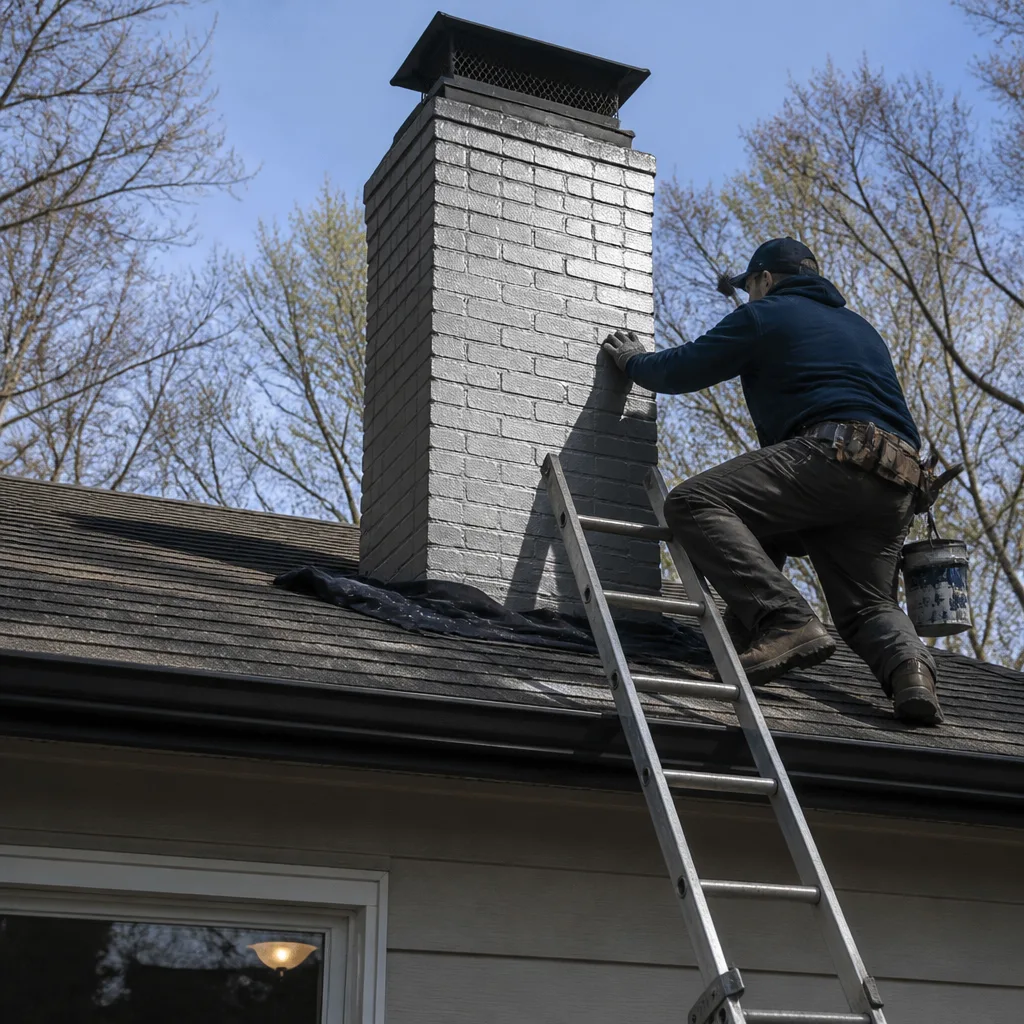
These are the classic 1980s and 1990s colonials with a masonry chimney running straight up from the first-floor fireplace through the second floor and out the roof. The flue is usually 15 to 30 feet tall. The DIY problem here isn’t the technique; it’s the height. Cleaning from the top means setting a ladder on a roof that’s 25 to 35 feet up, often with a steep pitch. This is a fall hazard that no brush kit is worth. If you can safely access the roof and the flue runs straight, you can attempt a top-down brush cleaning. Most homeowners we talk to in Sandy Springs decide the ladder risk plus the time isn’t worth it on a two-story house.
2. Offset flues in mid-century ranches and split-levels
Many Sandy Springs homes built in the 1960s and 1970s have chimneys that jog partway up because the fireplace sits off-center from the roofline. An offset flue has at least one bend. A rigid brush on fiberglass rods will not easily navigate that bend. You can spend an hour working the rods and still leave creosote packed in the offset. These flues are where we most often find stage-two and stage-three creosote sitting in the bend, hidden and hardened. This configuration is firmly in the professional column.
3. Prefab zero-clearance inserts (common in newer Sandy Springs construction)
Homes built after the early 2000s in Sandy Springs often have prefab fireplaces with metal flues. These units are factory-engineered. Cleaning them yourself with a metal brush can scratch the stainless liner, and the factory warranty typically requires professional maintenance. More importantly, prefab fireplaces have specific clearance requirements and component condition issues (warped panels, rust, damaged insulation) that only a trained eye can catch. If you have a prefab fireplace, skip the brush kit entirely and have a professional sweep who knows these units.
The Honest Cost Comparison: DIY vs Kindling’s Flat-Rate Cleaning
Let’s put real numbers on it. We respect budgets in Sandy Springs, and “just do it yourself” advice that ignores what time actually costs isn’t honest. Here’s the breakdown, or see our full Chimney Cleaning Cost Breakdown: The Sandy Springs Homeowner’s Reference for 2026 for deeper detail.
| Item | DIY Cost | Professional Cleaning |
|---|---|---|
| Brush kit (poly brush, 6 rods) | $35 – $75 | Included |
| Shop vacuum with HEPA filter | $60 – $120 (one-time) | Included |
| Drop cloths, tarps, tape | $15 – $30 | Included, plus shoe covers and a photo of the clean-up before we leave |
| Ladder rental or purchase | $40 – $250 | Included |
| Your time | 2 – 4 hours per cleaning | Zero |
| Inspection (camera, CO meter, draft gauge) | Not available | Included with every sweep |
| Typical total | $150 – $475 first year, less after | $189 – $329 flat rate for a standard cleaning |
Most standard chimney sweeps in Sandy Springs run between $189 and $329 for a single flue. Our flat-rate cleaning at Kindling Chimney Sandy Springs falls in that range, and the written price is delivered before any work starts. No surprises at the door. That flat rate includes the sweep, the full inspection with the camera, the draft check, and the clean-up protocol that leaves your floors the way we found them. The DIY route can be cheaper in dollar terms, yes, but it doesn’t include the inspection, and the inspection is where the actual safety information lives.
If you’re comparing strictly on price, the honest comparison isn’t “$80 in materials versus $250 for a pro”; it’s “$80 for cleaning only versus $250 for cleaning plus an inspection you can’t do yourself.” The second is a different product.
The Four-Question Decision Framework
Here’s the framework we give to Sandy Springs homeowners who ask us directly: “Should I just do this myself?” Answer these four questions honestly and the decision mostly makes itself.
- Is the flue straight and no more than one story tall? If no, call a professional. Offset flues and two-story roof access change the risk profile enough that the brush kit isn’t the right tool for the job. If yes, continue.
- Has the chimney been inspected by a professional within the last two years? If no, call a professional. You need a baseline inspection before you start cleaning on your own, because cleaning without knowing the liner condition is removing the only clue that something is wrong. If yes, continue.
- Is the creosote soft, dusty, or flaky rather than shiny and hard? If you can see a dark, glossy coating inside the flue, or if you don’t know how to tell, call a professional. Glaze-stage creosote won’t come out with a poly brush, and you’ll think you cleaned a flue that’s still carrying a significant fire hazard. If the creosote is light and you’re confident, continue.
- Do you have a safe way to access the roof and the time to do the job properly, including clean-up? If no, call a professional. A rushed chimney cleaning is worse than no cleaning because it gives a false sense of safety. If yes, a careful DIY cleaning on a chimney that passed questions one through three is a reasonable choice.
That’s the framework. No pressure in either direction. If your chimney fits the DIY profile, the brush kit can serve you well. If it doesn’t, you’re not being upsold; you’re being told the truth about what your specific flue requires.
What a Proper DIY Cleaning Actually Requires
If you’ve gone through the four questions and your chimney lands in DIY territory, here’s what the job actually takes. This is not a recommendation to skip professional service; it’s a plain list of what’s involved so you can decide with open eyes.
Tools you’ll need:
- A poly chimney brush sized to your flue (measure the flue opening first; a 6-inch round flue needs a 6-inch or slightly larger brush)
- Fiberglass rods that screw together (avoid metal rods; they can damage the flue)
- A shop vacuum with a HEPA filter (regular vacuum filters blow fine soot back into the room)
- Canvas or plastic tarps to cover the hearth and surrounding floor
- Painter’s tape to seal the firebox opening
- Safety glasses and an N95 or better mask
- A ladder that extends at least three feet above the roofline, with a stabilizer if possible
- Seal the fireplace opening with plastic and tape from the inside. This prevents soot from billowing into your living room.
- Spread tarps over the hearth and floor area around the fireplace. Soot gets everywhere if you don’t.
- Climb to the roof with the brush and rods. Remove the chimney cap if there is one.
- Attach the brush to one rod, insert it into the flue, and scrub up and down. Add rods as you go deeper.
- Continue until the brush reaches the bottom. Then reverse and pull the rods out, scrubbing on the way up.
- Replace the cap and climb down.
- Wait 5 to 10 minutes for soot to settle, then open the firebox seal and vacuum the debris.
- Dispose of creosote soot carefully. It’s acidic and should not go into garden beds or compost.
The process, step by step:
Total time: two to four hours for a first-timer. Total dollar cost: as the table above shows, $150 to $475 in the first year when you’re buying the vacuum and ladder. And here’s the thing we tell every homeowner who goes this route: you’ve cleaned the flue. You have not inspected it. Schedule a Chimney Inspection in Sandy Springs every other year regardless of who does the cleaning. The two work in sequence, not as substitutes.
When Professional Cleaning Matters Most
There are seasons and situations in Sandy Springs where professional cleaning isn’t a convenience; it’s the only sensible option. The first is pre-purchase. If you’re buying a home in Sandy Springs, a chimney inspection before closing is the single most useful chimney service you can buy, because it tells you whether you’re inheriting a $200 cleaning or a $2,000 liner job. For help choosing a provider, read our How to Hire a Chimney Cleaning Contractor in Sandy Springs: A Step-by-Step Guide. We do these inspections regularly, and the camera doesn’t lie.
The second is after any event that changes the chimney’s condition: a chimney fire, no matter how small; a severe storm that rattled the cap or crown; a remodel that changed the roof line or fireplace surround. Any of these warrants a professional look before the next burn.
The third is when the home has gone years without service. A chimney that hasn’t been swept in five years or more isn’t a DIY job. The creosote is likely stage-two or stage-three, and the liner condition is unknown. Chimney Sweep in Sandy Springs work is about removing buildup safely without damaging the flue, and hardened glaze takes rotary tools or chemical cleaners that a brush kit simply isn’t designed to handle.
The fourth is when you have a prefab fireplace. These units are built to tight tolerances, and a scratched or warped component can create a fire risk that a brush cleaning won’t reveal. If your fireplace is a factory-built unit, professional cleaning is the right default.
Creosote: What It Is and Why Stage Matters
Creosote is the black residue that condenses inside the flue when wood smoke cools before it exits the chimney. It’s a natural byproduct of burning wood, and every wood-burning fireplace produces it. What matters for your safety is how much has built up and what stage it’s in.
Stage one: dusty soot. It’s light, dry, and brushes away easily. This is what a poly brush handles well.
Stage two: flaky crust. This is creosote that has built up in layers. It looks like dark cornflakes stuck to the flue wall. A stiff brush can break it loose, but it takes more scrubbing, and it often hides the condition of the liner beneath.
Stage three: glaze. This is creosote that has baked into a hard, shiny coating. It’s concentrated fuel, and it’s the form most associated with chimney fires. Glaze cannot be removed with a DIY brush. It requires chemical treatment, rotary cleaning tools, or both.
The catch for the DIY route is that stage-two and stage-three look similar from the top of a ladder, and neither is visible from the firebox. This is where the professional inspection earns its cost. We see glaze-stage creosote in Sandy Springs chimneys regularly, usually in homes where the fireplace is used heavily during our cold, damp winters and the flue has never had a proper cleaning. The homeowner who cleaned it themselves with a poly brush and thought the job was done goes into January with a flue that’s still carrying stage-three glaze. That’s not negligence; it’s a tool limitation.
And for what it’s worth, the kind of wood you burn in Sandy Springs matters too. Unseasoned wood from a big-box store that’s been sitting on a wet rack produces more creosote than properly dried hardwood. If you’re burning routinely from November through February, expect creosote to build faster than the standard “once a year” guidance assumes.
What Kindling Chimney Sandy Springs Does Differently
We’re writing this guide as the people who do this work every day in Sandy Springs, and we want to name plainly what our cleaning actually includes, because “chimney sweep” means different things to different companies.
Every cleaning at Kindling Chimney Sandy Springs home includes the sweep itself, a full camera inspection of the liner, a draft check with a CO meter, and a written assessment of what we found. That assessment tells you what’s clean, what’s worn, what can wait, and what needs attention before the next burn. Nothing is recommended without camera evidence you can see for yourself. If the liner is fine, we tell you it’s fine and we don’t invent work. If it needs repair, you see the image and we talk through options at the price on the written estimate, with no on-the-spot pressure.
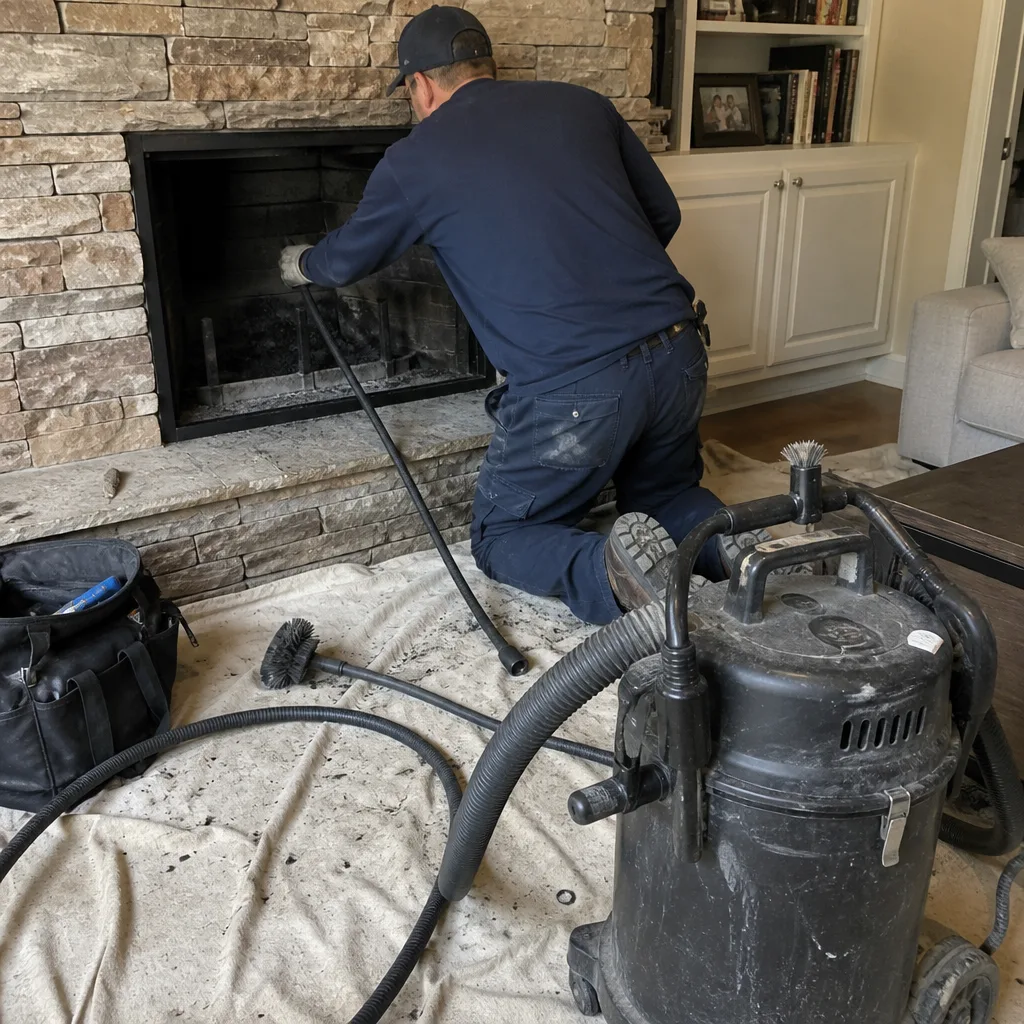
Our technicians are background-checked and arrive in uniform. The C.A.R.E. values we work under are simple: shoe covers and drop cloths go down on arrival, nothing in your home is moved without asking, and a photo of the clean-up is taken before the crew leaves. We use pet-safe products where there is a choice, and our tools can be run quietly if the kids are asleep. Those details matter in a home with children and pets, and they’re not optional add-ons; they’re the baseline.
The 365-Day Done Right Promise sits behind every clean. If something isn’t right, we make it right, no fine print and no runaround. That promise is the reason we can tell you exactly what a cleaning includes and what it costs before we start: the written price is part of how we work, not a sales tactic.
What a Professional Cleaning Protects in Your Home
When a chimney is cleaned properly, the things being protected are specific and physical. Your floors. Your air. Your furniture placement. Your children’s and pets’ breathing space.
We use drop cloths and shoe covers because soot travels further than you’d expect when a brush is working. A professional sweep contains the mess. Fireside rugs, hardwood, light-colored carpet near the hearth; all of it stays clean when the firebox is sealed and the tarps are down before the first rod goes in.
Air quality is the quieter concern. Fine creosote particles, wood ash, and dust that come out of a dirty flue during a brushing can settle into the room if the firebox isn’t sealed and the vacuum isn’t HEPA-filtered. For families with children or pets who spend time on the floor, that dust isn’t a theory; it’s something they’d be breathing. We seal the firebox, vacuum with HEPA filtration, and take a photo of the clean-up before we leave. That’s the Cedarwell Care Promise, and it’s on every visit whether you ask for it or not.
A cleaning also protects the things you can’t see. The liner, the cap, the crown, the smoke shelf. These structural components determine whether your fireplace operates safely. The cleaning removes what’s hiding them. The inspection tells you what condition they’re in. Both happen on the same visit.
Why Sandy Springs Chimneys Need Attention Before Burning Season
Sandy Springs sits at about 1,100 feet in the northern Atlanta metro, and our winters are mild compared to the mountains but damp compared to the coast. That humidity has a specific effect on chimneys: moisture mixing with creosote accelerates its hardening. Flues that would stay stage-one in a drier climate can progress to stage-two or stage-three here in a couple of seasons.
The burning season in Sandy Springs runs roughly November through March, with the heaviest use in January and February. The window to schedule a cleaning is actually now: late summer through fall, before the first cold snap. Wait until December and every sweep in the metro is booked out weeks ahead, and you’ll be lighting fires in a flue that hasn’t been checked. The fire code won’t force you to sweep. The physics won’t wait for a convenient appointment.
We see a seasonal pattern too. The first cold weekend of the year brings calls from homeowners who lit a fire, smelled something sour or smoky, and found themselves wondering whether it’s been too long. It’s usually a stage-two creosote buildup or a draft issue, and it’s always easier to address before the fire is scheduled, not after it’s smoking into the living room.
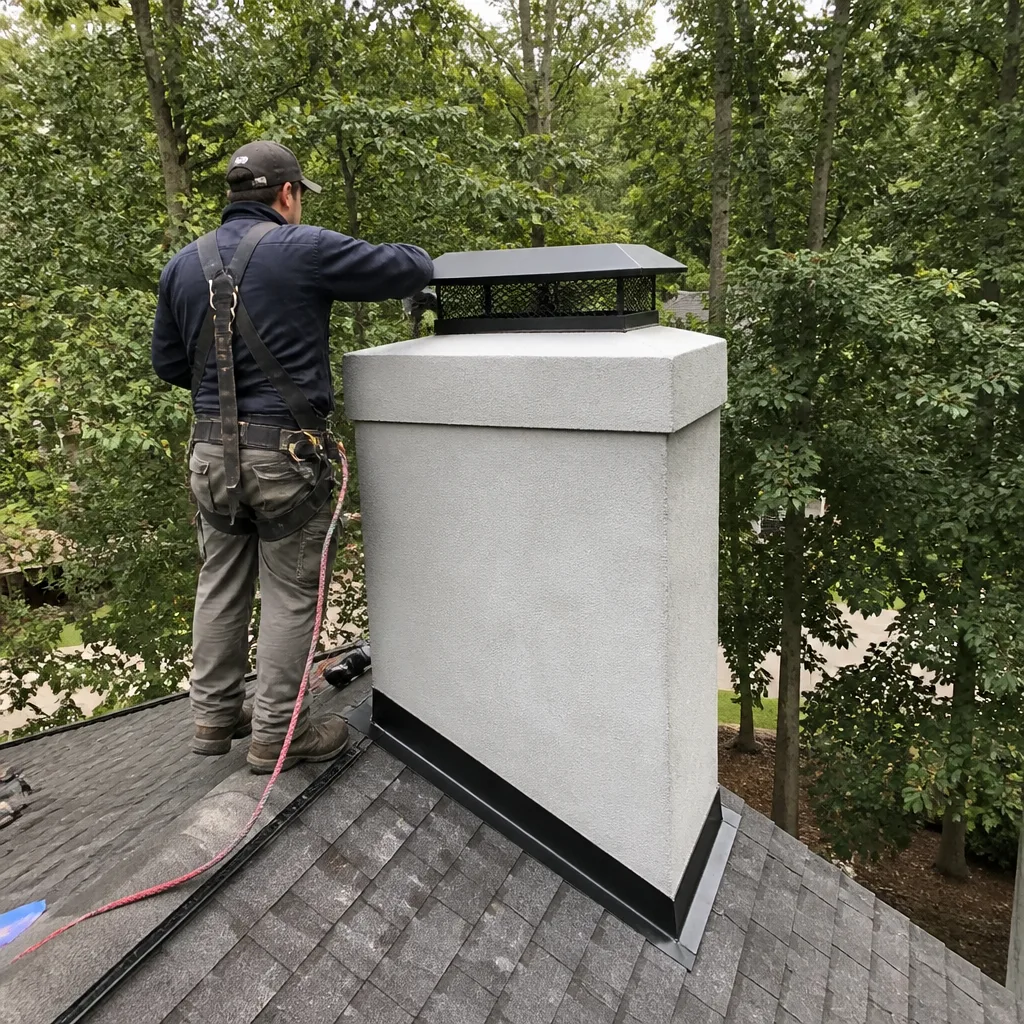
See the difference
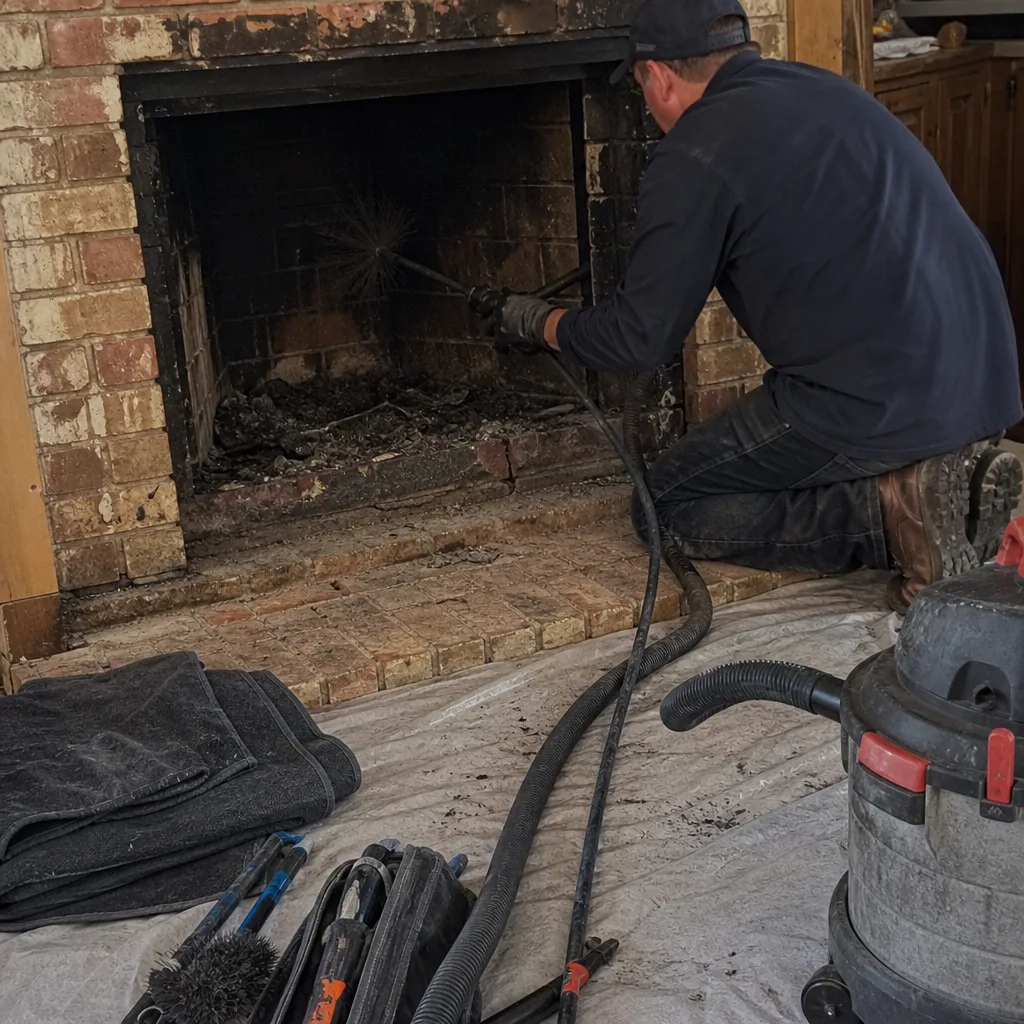 Before
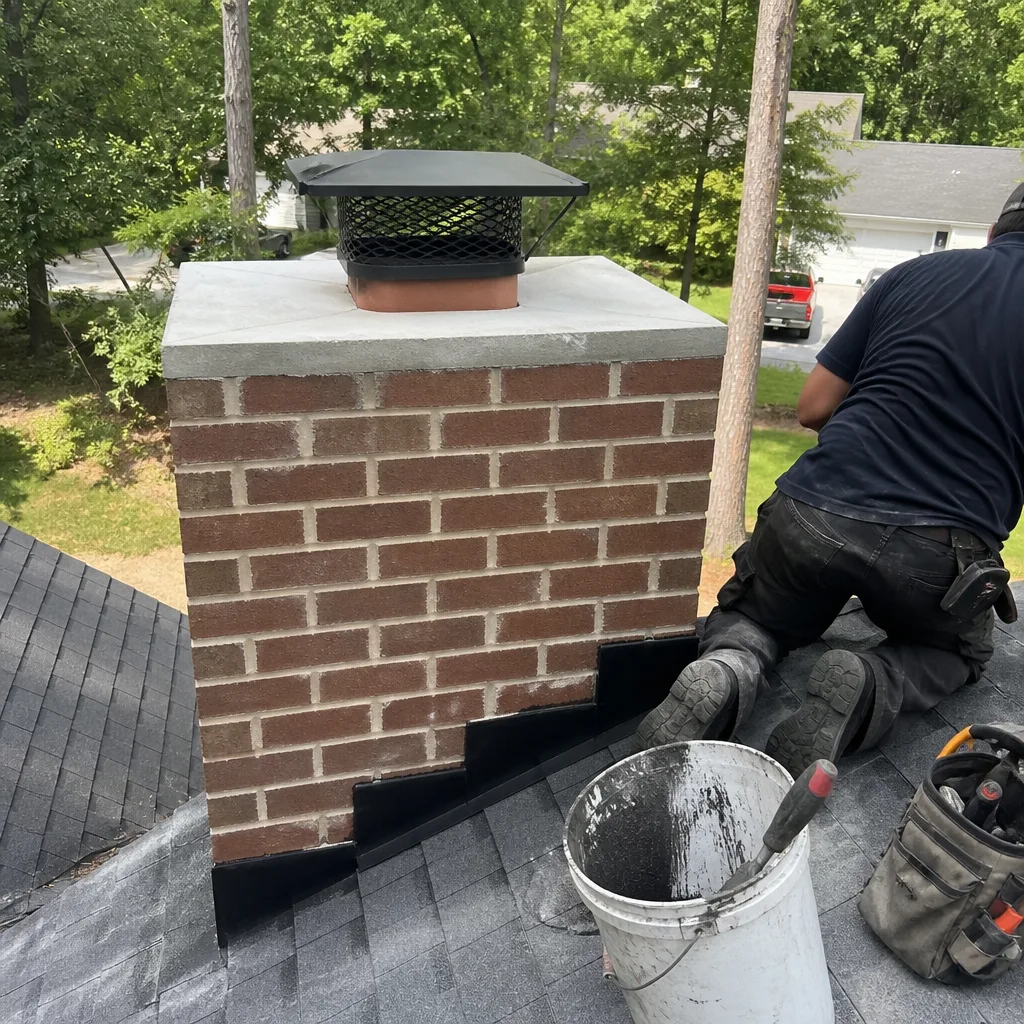 After
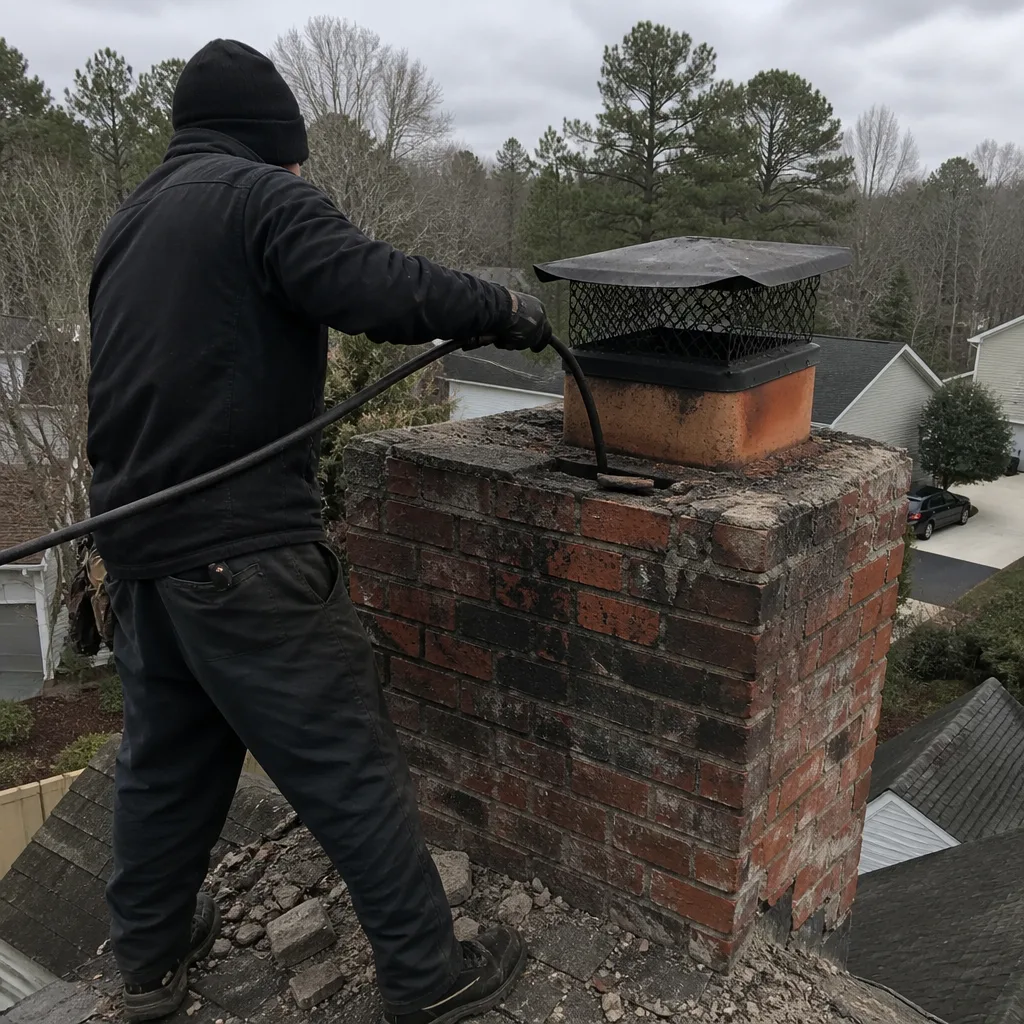 Before
 After
 Before
 After
Common Mistakes to Avoid
- Assuming a brush kit equals an inspection. Cleaning and inspecting are different jobs. You can do the first without tools you don’t own; you cannot do the second.
- Cleaning an offset flue with rigid rods. In Sandy Springs ranches and split-levels, that bend in the flue will frustrate you and leave creosote behind. If your chimney jogs, call a professional.
- Using a metal brush on a prefab flue. Prefab fireplace flues are stainless steel. A metal brush can scratch the liner, and the factory warranty may not cover damage from improper cleaning.
- Burning unseasoned wood and then expecting a light cleaning. Wet wood from a Sandy Springs big-box store creates more creosote, faster. Dry, seasoned hardwood is the single best thing you can do for your chimney between cleanings.
- Skipping the cap inspection. The cap is the first line of defense against rain, birds, and downdrafts. If it’s loose, rusted, or missing, the flue is taking on water even if the inside looks clean.
- Putting off an inspection because you cleaned it yourself last year. A DIY cleaning removes creosote; it doesn’t verify liner condition. Schedule a professional Fireplace Repair in Sandy Springs assessment if it’s been more than two years since the last camera check.
- Ignoring a smoky fireplace after a DIY clean. If you’ve cleaned the flue and the fireplace still smokes, something else is wrong: draft, damper, cap, or liner. Don’t burn through it; have it looked at.
When to Call a Professional
If your flue is offset, two stories tall, prefab, or hasn’t been inspected in the last two years, call a professional before you light the next fire. If you see shiny black glaze inside the flue, smell something acrid when the fireplace is in use, or notice staining around the chimney chase in the attic, don’t wait. These are the situations where the inspection is the service, and the cleaning is secondary.
Kindling Chimney Sandy Springs offers free estimates in Sandy Springs. Call (229) 459-1048 and a live person will answer, 24 hours a day, 7 days a week, no voicemail trees and no days-later callbacks. We’ll walk through what you’re seeing, give you an honest read on whether it needs attention now or can wait, and provide a written price before any work starts.
Frequently Asked Questions
Most standard chimney sweeps in Sandy Springs run between $189 and $329 for a single flue, and the price is generally flat-rate rather than hourly. Kindling Chimney Sandy Springs delivers a written price before any work starts, so the number is known before the crew arrives. Call (229) 459-1048 for a free estimate on your specific chimney.
Yes, for wood-burning fireplaces in regular use, an annual cleaning is the standard recommendation, with the inspection that comes with it being the more important half. If you burn only occasionally or burn only seasoned hardwood, you may be able to stretch to 18 months between cleanings, but the camera inspection should still happen yearly. In Sandy Springs’s damp climate, creosote hardens faster than in drier areas.
You can clean a short, straight, lightly used flue with a brush kit, provided you have safe roof access and the time to do the job properly including clean-up. What you cannot do with a brush kit is inspect the liner for cracks, measure draft, check the cap seal, or identify creosote stage. If your chimney is offset, two stories tall, or prefab, the brush kit isn’t the right tool.
Creosote continues to build inside the flue, progressing from dusty soot to flaky crust to hard glaze, and glaze-stage creosote is concentrated fuel. The risks of a heavily loaded flue are chimney fire and reduced draft, which can push combustion gases back into the living space. Plus, the longer a liner sits under a layer of creosote, the harder it is to assess its condition. The fix is a proper cleaning and inspection, not a scare tactic; it’s maintenance.
A sweep removes creosote and soot from the flue. An inspection evaluates the condition of the chimney system: liner, crown, cap, damper, smoke shelf, and clearances. In Sandy Springs, a professional sweep typically includes a Level 1 inspection as part of the service. At Kindling, every cleaning includes a camera inspection, a draft check with a CO meter, and a written report of what we found. The Chimney Sweep in Sandy Springs service is the full package, not just a brushing.
Clear the area around the fireplace about six feet back, move any furniture or rugs that are close to the hearth, and if you have pets, keep them in another room during the service. Our technicians handle the rest: shoe covers and drop cloths go down on arrival, the firebox is sealed before the brush goes in, and a photo of the clean-up is taken before we leave. Anything we need to move, we ask first.
The Bottom Line
The DIY versus professional chimney cleaning question in Sandy Springs is less about cost and more about capability. A poly brush kit can clean a straight, accessible flue, and for a small number of homes that’s a genuinely reasonable option. What the kit can’t do is inspect, and the inspection is where the safety information actually is. With our damp winters, glaze-stage creosote, offset flues in older homes, and prefab inserts in newer ones, most Sandy Springs chimneys fall on the professional side of the line.
If your chimney fits the four-question DIY profile, clean it carefully and schedule a professional inspection every other year. If it doesn’t, bring in a sweep who uses a camera and gives you a written price before the work starts. Kindling Chimney Sandy Springs home services the full spectrum of chimney cleaning, inspection, and fireplace repair in Sandy Springs, with a live person answering every call and the 365-Day Done Right Promise behind every job. Call (229) 459-1048 for a free estimate, and you’ll know the number before any work begins.
Written by Danny Cortes, Owner at Kindling Chimney Sandy Springs, serving Sandy Springs since 2003.